



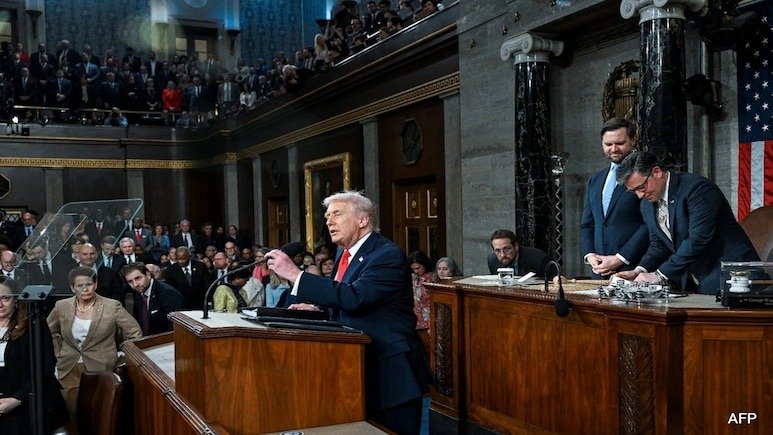
WASHINGTON D.C. (Feb 25, 2026) — Tensions in the U.S. Capitol reached a boiling point last night as approximately 30 Democratic lawmakers skipped President Donald Trump’s State of the Union address, choosing instead to attend a counter-rally titled the “People’s State of the Union.”
The Boycott & Counter-Events
-
The “People’s SOTU”: Held on the National Mall, this event featured prominent figures like Senator Chris Murphy and Representative Summer Lee. Speakers focused on the “crisis” facing the union, specifically citing aggressive immigration enforcement and cuts to social programs.
-
“State of the Swamp”: A second alternate event at the National Press Club hosted celebrities like Robert De Niro and Mark Ruffalo, alongside politicians, to protest what they described as a “government for the elite.”
-
Silent Defiance: Not all Democrats boycotted; many, including Senate Minority Leader Chuck Schumer, attended but signaled opposition by bringing guests affected by administration policies—including survivors of sex offender Jeffrey Epstein and families impacted by ICE deportations.
Key Points of Contention
The boycott was fueled by three primary grievances:
-
Immigration: Protesters on the Mall held “No Money for ICE” signs, calling for an overhaul of the agency following a string of controversial deportations in Minnesota.
-
Accountability: Lawmakers used the platform to demand the full release of all files related to Jeffrey Epstein, accusing the administration of protecting powerful figures.
-
Governance: Senator Murphy stated, “These are not normal times, and Democrats have to stop behaving normally,” accusing the President of treating the office as a “despot.”
The Republican Response
House Speaker Mike Johnson slammed the boycott as “detestable,” arguing that lawmakers have a duty to respect the office and tradition regardless of party affiliation. He attempted to pivot the focus toward national unity by highlighting the presence of the U.S. Men’s Olympic Hockey Team, who received a bipartisan standing ovation during the speech.