



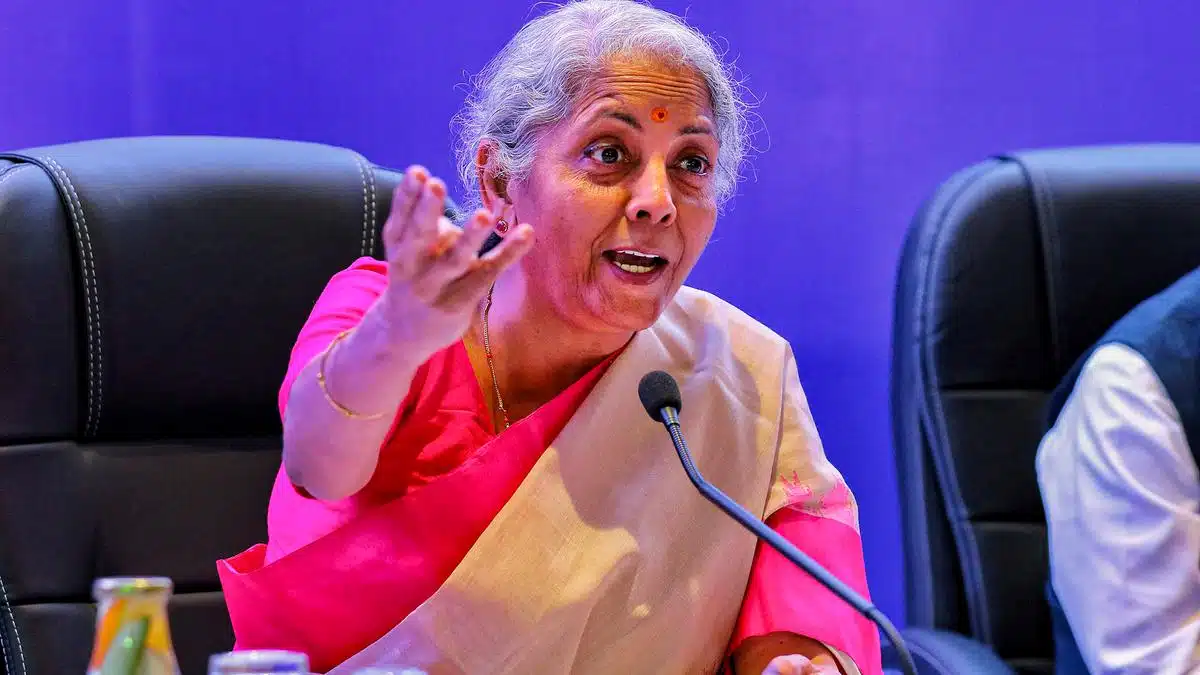
NEW DELHI — Finance Minister Nirmala Sitharaman informed the Rajya Sabha on Tuesday that the government has diverted the entire 25% increase in domestic LPG production exclusively to Indian households. This move aims to streamline domestic supplies and stabilize the market amid ongoing energy disruptions in West Asia.
Navigating the Strait of Hormuz Crisis
Addressing concerns over supply chain vulnerabilities, the Finance Minister highlighted India’s heavy reliance on critical shipping lanes:
-
Import Dependency: Currently, 65% of India’s LPG is imported to meet national demand.
-
Geopolitical Risk: Approximately 90% of these imports transit through the Strait of Hormuz, a narrow waterway currently experiencing “turbulent times” due to regional conflicts.
-
Proactive Measures: Despite these hurdles, Sitharaman assured the House that there is no energy shortage in the country. Indian refineries have maximized their outputs, and the government is maintaining a “steady flow” of fuel to prevent any dry-outs at the distributor level.
Economic Resilience & Infrastructure
The Finance Minister emphasized that India’s macroeconomic framework remains robust enough to withstand external shocks, such as the volatility in global oil prices.
-
Capital Outlay: To support long-term energy security and infrastructure, the government has scaled the capital expenditure (capex) to ₹12.2 lakh crore for the 2026-27 fiscal year.
-
Diversification: Beyond the Gulf, India has successfully begun sourcing LPG from alternative markets, including the United States, Norway, and Canada, to reduce its singular dependence on the Hormuz route.
Sitharaman concluded by stating that the strength of the Indian economy today provides the necessary buffer to meet such unforeseen global problems without compromising domestic welfare.