



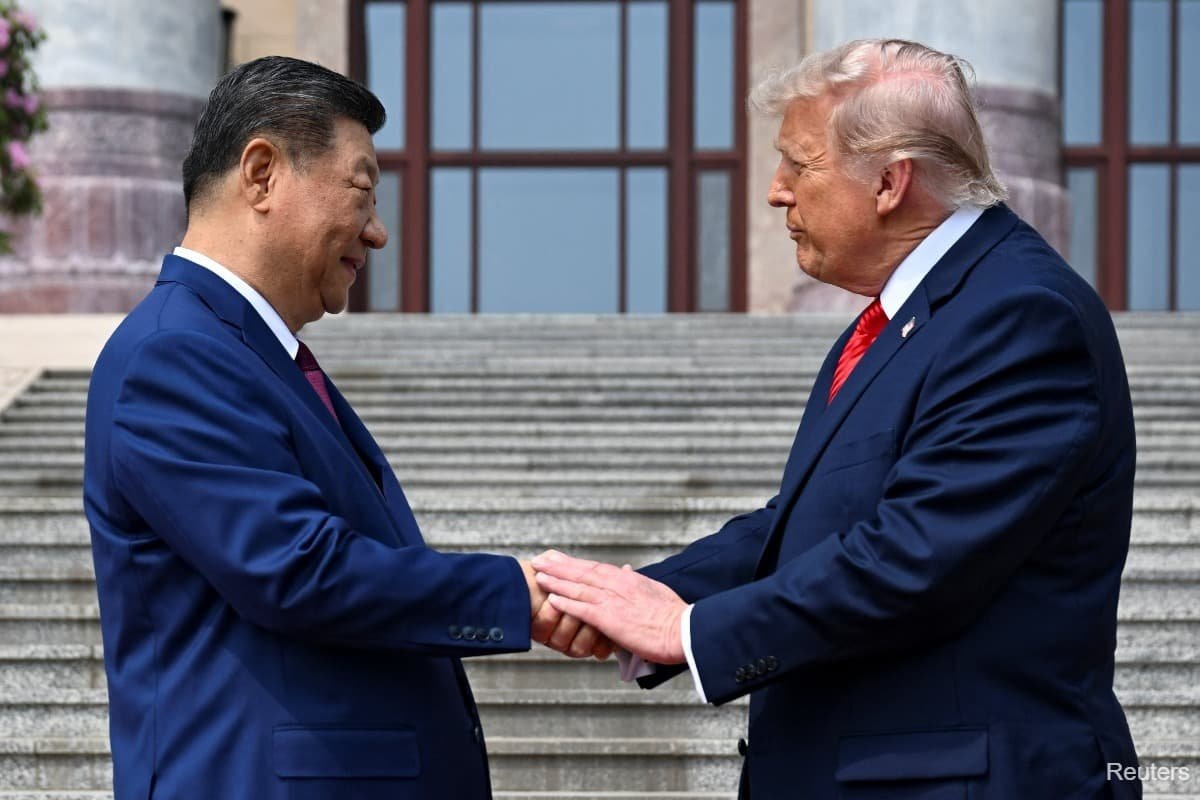
WASHINGTON: Despite the outwardly diplomatic and cordial tone of the recent high-profile summit between US President Donald Trump and Chinese President Xi Jinping, internal friction is mounting. Senior US officials are privately warning that the meeting may have inadvertently placed Taiwan in its most vulnerable position in decades.
According to a report by Axios, presidential advisers are deeply uneasy that Beijing interpreted the summit as a tactical window, significantly increasing the probability of a Chinese move against Taiwan within the next five years.
The Inner Circle’s Alarm: The Semiconductor Vulnerability
White House insiders fear that President Xi is successfully reframing Beijing’s geopolitical posture from a rising challenger to an absolute equal of the United States.
“This trip signaled a much higher likelihood that Taiwan will be on the table in the next five years. There’s no way we can be ready economically—the chip supply chain won’t be anywhere close to self-sufficiency.” — Trump Administration Adviser, via Axios
The core panic within the administration circles back to global technology markets. Corporate leaders and economic planners warn that the US is years away from microchip self-sufficiency. Any aggressive Chinese maneuver against Taiwan would instantly cripple the global semiconductor pipeline, freezing advancements in artificial intelligence, consumer tech, and defense manufacturing.
Trump’s “Negotiating Chip” Philosophy Sparks Concern
The anxiety has been compounded by President Trump’s recent public statements. In a post-summit interview with Fox News, Trump directly referred to a pending $14 billion arms package to Taiwan as financial and diplomatic leverage against Beijing, stating, “I’m holding that in abeyance, and it depends on China… It’s a very good negotiating chip for us.”
Furthermore, Trump disrupted Washington’s long-standing policy of strategic ambiguity by explicitly stating he is not looking to defend a formal declaration of independence by Taipei: “I’m not looking to have somebody go independent. And, you know, we’re supposed to travel 9,500 miles to fight a war. I’m not looking for that.” He additionally urged Taiwan’s premier chip makers to entirely relocate their production facilities to US soil.
Taipei Pushes Back
Taiwan’s presidential office moved quickly to counteract the narrative of vulnerability. Presidential Spokesperson Karen Kuo firmly asserted the island’s sovereign status while reminding Washington of its legal obligations.
“The Republic of China is a sovereign, independent, democratic country; this is self-evident, and Beijing’s claims are therefore without merit,” Kuo stated. Taipei emphasized that while it remains grateful for American cooperation, bilateral defense acquisitions and US arms sales are strictly mandated by existing US federal law, independent of shifting diplomatic trade-offs.