



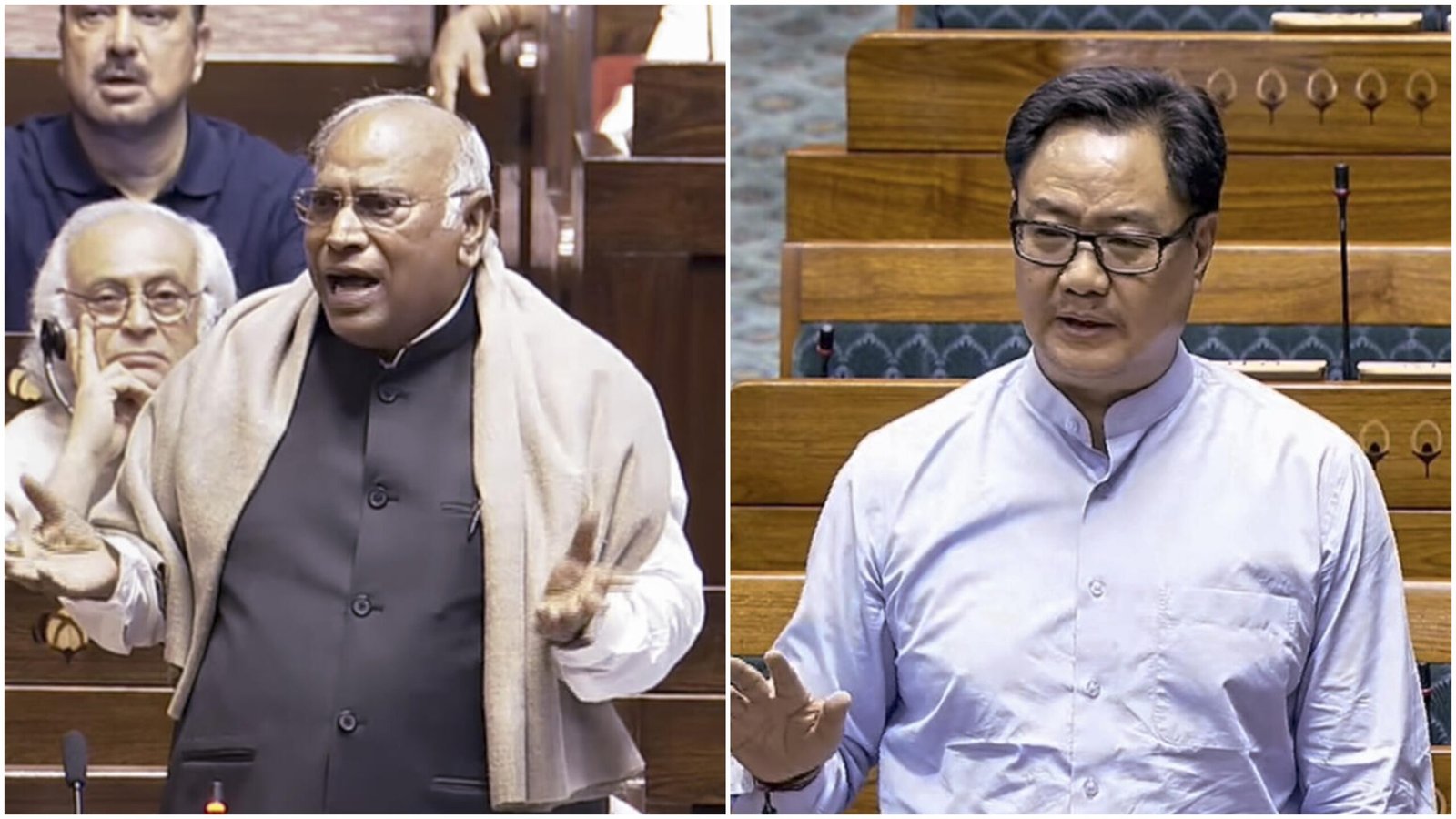
NEW DELHI – The Rajya Sabha witnessed heated exchanges on Wednesday as Leader of Opposition Mallikarjun Kharge and Parliamentary Affairs Minister Kiren Rijiju traded barbs over the government’s handling of the Middle East conflict and the absence of the Prime Minister from a recent all-party meeting.
The confrontation began when Mr. Kharge questioned why a formal discussion on the global crisis had not been prioritized in Parliament, despite the rising costs of LPG and fuel. Minister Rijiju hit back, accusing the opposition of “playing politics” during a sensitive international situation.
Key Points of Contention
-
PM’s Absence: Kharge criticized Prime Minister Narendra Modi for not attending the all-party meeting on the Middle East, labeling the present ministers as “dummies” with no real authority.
-
Opposition Attendance: Rijiju countered by noting that neither the Leader of Opposition in the Rajya Sabha nor the Lok Sabha attended the meeting, despite other members of their parties being present.
-
Economic Impact: The opposition raised concerns over skyrocketing fuel prices linked to the conflict. In response, the government highlighted that the Finance Minister had already detailed steps taken—including excise duty cuts—to insulate India from global price surges.
-
Legislative Agenda: Amid the din, Chairman C.P. Radhakrishnan announced that the House would skip lunch to clear pending business, including the CAPF (General Administration) Bill 2026 and the Insolvency and Bankruptcy Code (Amendment) Bill 2026.
Sharp Rhetoric
The debate turned personal as Rijiju accused Kharge of failing to uphold the dignity of his office by “abusing” the Prime Minister. Kharge retorted by questioning the government’s democratic credentials, alleging that the treasury benches were “forcibly” pushing their agenda through voice votes without addressing opposition concerns.
Strategic Context
The clash underscores the deep divide between the government and the opposition as India navigates the economic fallout of the Middle East war. While the government seeks to project a front of national unity and stability, the opposition is intensifying its focus on domestic inflation and the demand for greater executive accountability in Parliament.