



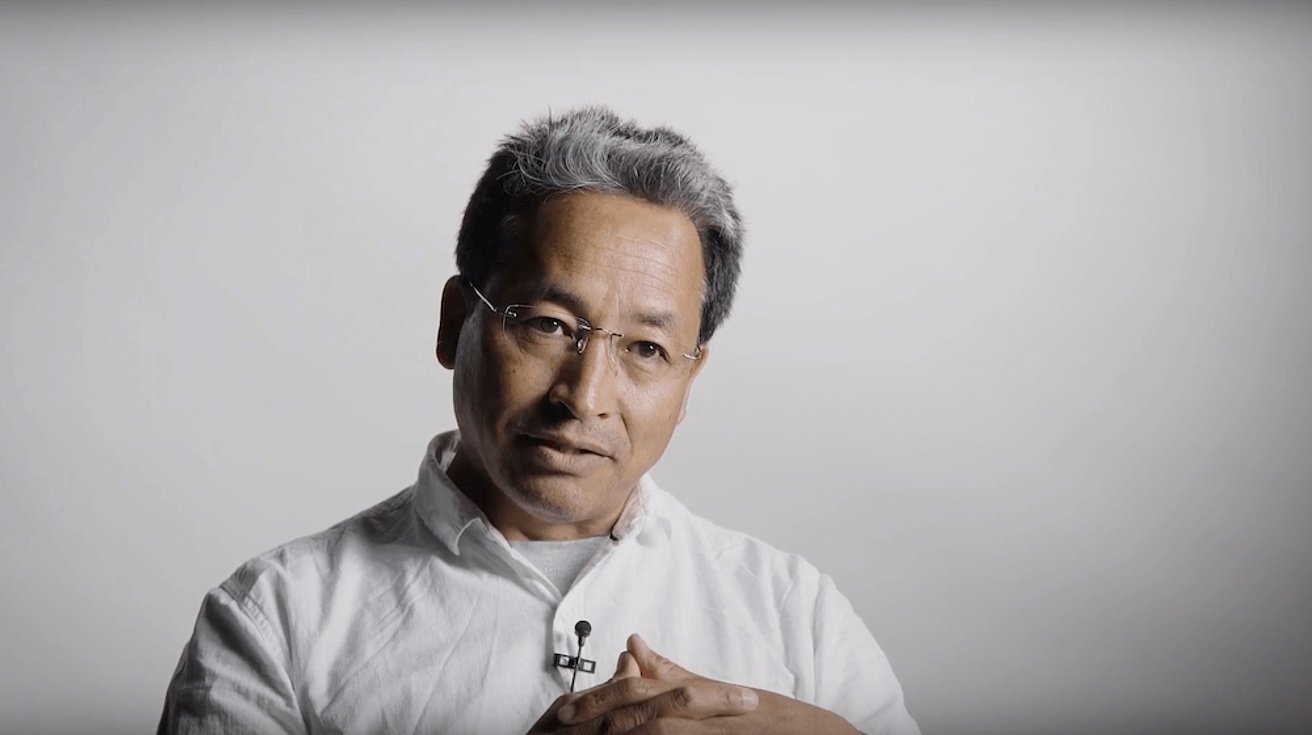
LEH: Direct political dialogue in Ladakh has taken a sharp turn following a candid high-level meeting between Lieutenant Governor Vinai Kumar Saxena and prominent climate activist Sonam Wangchuk. The administrative intervention comes amid prolonged, delicate negotiations between Ladakhi leadership and the Union Home Ministry regarding constitutional autonomy.
Following the exchange, the Lieutenant Governor issued a formal caution to Wangchuk against steering a “misleading and provocative narrative” that risks destabilizing public peace and threatening the region’s economy.
The Friction Point: Retracting the Manipur Parallel
The primary catalyst for the administration’s sharp warning was a recent controversial statement by Wangchuk, who had publicly compared Ladakh’s political impasse to the conflict-ridden state of Manipur.
-
The Governor’s Warning: LG Saxena explicitly stated that democratic expression must never be used as a “license for fabricating falsehoods and rabble rousing,” warning that such extreme analogies poison the public sphere.
-
The Acknowledgment: According to the official statement from the Lieutenant Governor’s office, Wangchuk admitted during the closed-door meeting that drawing a parallel between Ladakh and Manipur was an “error of judgement”. Wangchuk has not yet issued a public response to the statement.
Economic Safeguards: Protecting Peak Tourism Season
A major portion of the dialogue focused on the severe economic consequences of sustained civil unrest on Ladakh’s local population:
-
Seasonal Vulnerability: The administrative warning coincides directly with the launch of Ladakh’s peak summer tourist season. This brief annual window serves as the financial lifeline for local hoteliers, homestays, taxi operators, and small businesses.
-
Disruption Matrix: Saxena emphasized that organizing continuous rallies and protests—especially despite the massive infrastructure projects pushed by the Centre—creates a highly negative environment for the tourism sector, which forms the spine of the local economy.
Infrastructure Alignment and Political Anomalies
Despite the sharp political differences, the meeting recorded common ground regarding several ongoing ecological and water-conservation projects in the cold desert:
-
Development Approvals: Wangchuk reportedly expressed appreciation for multiple state-backed engineering initiatives, including the Him Sarovar project, the restoration of the Igoo Phey Canal, the construction of the Mahe-Topko Canal, and ongoing large-scale green plantation drives.
-
The “Cockroach Party” Variable: The conversation briefly touched upon the recent emergence of a mysterious and controversial political faction locally dubbed the “Cockroach Party”. Wangchuk stated he was currently uncertain about the group’s true origins and would re-evaluate his position once he investigated the motivations of its founders.
The Core Constitutional Demands
Ladakh has remained a hotbed of political mobilization since it was separated from Jammu and Kashmir and designated a Union Territory in 2019. Joint fronts, including the Leh Apex Body and the Kargil Democratic Alliance, have consistently held their ground with a strict four-point charter for New Delhi:
-
Granting of full Statehood to Ladakh.
-
Inclusion of the region under the Sixth Schedule of the Constitution to protect tribal land.
-
Absolute legal and constitutional safeguards for local employment and land ownership.
-
Expanded parliamentary representation with additional Lok Sabha seats.
As the high-footfall travel season begins, the latest executive warning highlights a widening ideological gap between the central government’s infrastructure-first governance model and local groups demanding structural sovereignty.