



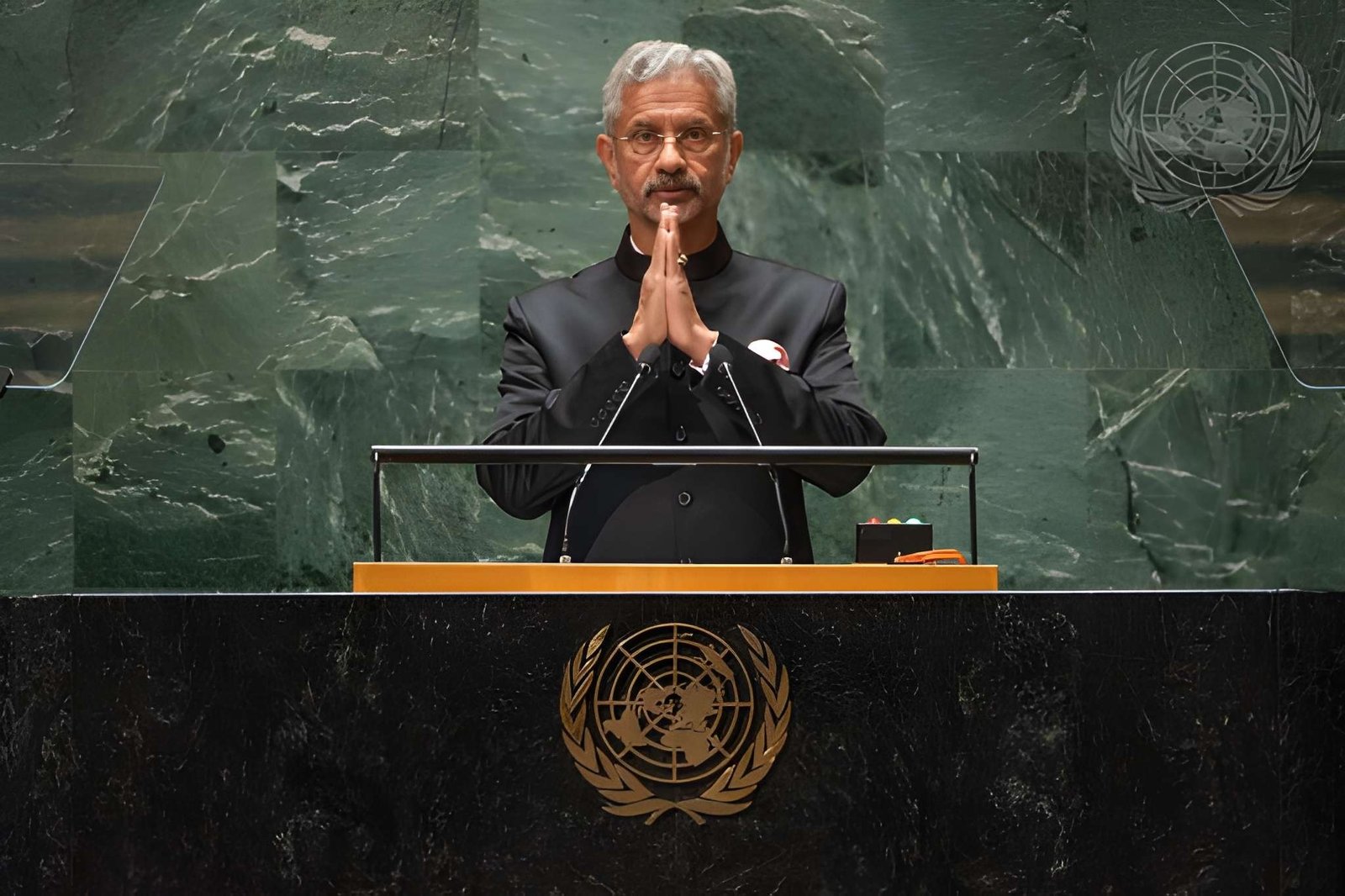
NEW YORK — India has officially launched its diplomatic campaign for a non-permanent seat on the United Nations Security Council (UNSC) for the 2028–29 term. Unveiled by External Affairs Minister S. Jaishankar at a dedicated event at the UN Headquarters on Monday, the campaign is anchored in a newly defined global vision: “SHANTI”.
The bid comes as New Delhi positions itself as a critical bridge-builder amid a highly fragmented geopolitical landscape marked by ongoing conflicts in Europe, the Middle East, and escalating regional tensions.
Decoding the ‘SHANTI’ Vision
The core of India’s campaign rests on the acronym SHANTI—translating to “peace” in Hindi—which outlines New Delhi’s strategic approach to global governance:
Securing Holistic Advancement through Norms, Trust, Integrity.
Speaking to an audience of UN ambassadors, diplomats, and international officials, Minister Jaishankar emphasized that sustainable global progress cannot survive in a fragmented environment where rules are selectively applied.
Core Priorities of the Campaign
-
Amplifying the Global South: Working to build an equitable world order where the voices of developing nations are heard in equal measure.
-
Modernizing Peacekeeping: Upgrading UN peacekeeping mandates to be better equipped, more realistically funded, and strategically prepared for future security threats.
-
Technological Safeguards: Ensuring the immense potential of emerging technologies is fully realized while building global guardrails against their malicious misuse.
-
Counter-Terrorism & Maritime Security: Choking financial networks feeding international terrorism and securing critical global maritime lifelines.
The Road to the 2027 Election
If successful, this will mark India’s ninth term as a non-permanent member of the UNSC, having last served during the 2021–22 cycle.
-
The Contenders: The formal elections will be held in June 2027 during the 82nd Session of the UN General Assembly. India will compete directly against Tajikistan for the single available seat allotted to the Asia-Pacific Group.
-
India’s Credentials: To reinforce its candidature, New Delhi is highlighting its unparalleled historical legacy in global security—having deployed nearly 300,000 personnel across 50 UN peacekeeping missions since inception, alongside managing active development partnerships in 79 countries.
Renewed Push for Comprehensive UN Reforms
While seeking a non-permanent seat, India has made it clear that temporary tenures do not resolve the structural deficiencies of the post-WWII multilateral order.
Prime Minister Narendra Modi recently addressed the Parliament of Indonesia, emphasizing that developing countries are demanding equal participation and that “reforms in the United Nations Security Council can no longer be delayed.”
India has warned that reforming the UNSC by simply expanding its non-permanent category would border on a “failure,” as it would fail to alter the core decision-making power dynamic concentrated within the five permanent veto-holding members (P5). Ambassador Harish Parvathaneni, India’s Permanent Representative to the UN, previously criticized “status-quoist” nations for using bureaucratic delay tactics to block progress and entrench existing inequities in the Council.
Diplomatic Itinerary: Following the campaign launch and a bilateral meeting with UN Secretary-General António Guterres, Minister Jaishankar will depart New York for Brussels to co-chair the 3rd India-EU Trade and Technology Council meeting on July 14–15.