



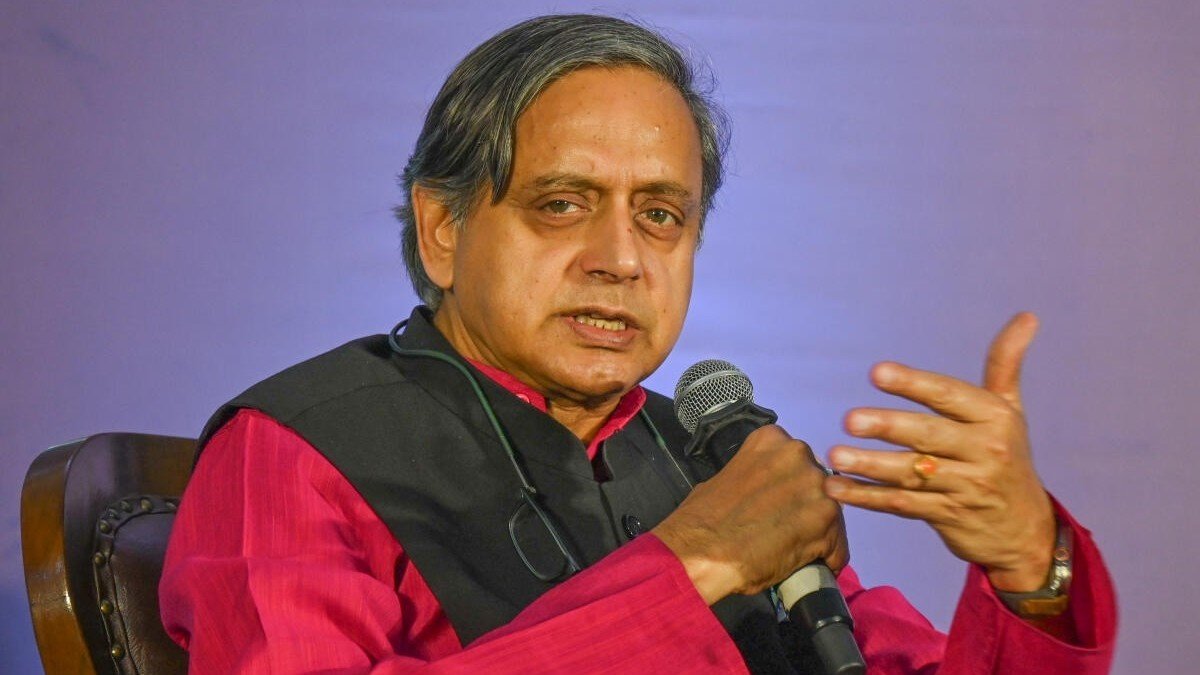
THIRUVANANTHAPURAM: A fresh political debate has erupted over the protocol surrounding India’s national song, with Congress MP Shashi Tharoor questioning the necessity of rendering all five verses of Vande Mataram at the beginning and conclusion of official functions. Labeling the practice “unnecessary and burdensome” for attendees, Tharoor argued that while the song command universal respect, making the full version mandatory for every event is difficult to justify.
The remarks come amid an ongoing controversy in Kerala regarding the singing of the national song, drawing sharp criticism from the Bharatiya Janata Party (BJP), which maintains that the full rendition is a binding constitutional protocol.
The Arguments Against Duplicated, Full Recitals
Speaking to reporters, Tharoor clarified that his critique was directed at the logistical imposition rather than the national song itself. His main arguments included:
-
Traditional Convention: Traditionally, a abbreviated version of the song—consisting of the first verse or two, which most citizens know by heart—was sung once at the beginning of an event, while the national anthem was played at the end.
-
The New Protocol: Tharoor pointed out that under recent practices, all five verses are being played at both the opening and closing of a single programme. He recalled a recent book launch attended by Vice President C P Radhakrishnan where the audience was required to stand through the lengthy, unfamiliar verses twice.
-
Lack of Legislative Backing: The MP noted that the issue may ultimately require legal adjudication, as there is no specific law passed by Parliament dictating this format; rather, it has historically been managed by convention. While the Kerala government views the full recital as optional, Governor Rajendra Vishwanath Arlekar holds a different stance.
“I can understand singing it once during ceremonial occasions involving the president, vice president or prime minister. But singing the entire song twice during a short programme is difficult to understand. I don’t see the rationale for it, and it is not particularly efficient either,” Tharoor stated.
BJP Counter-Attack: Guidelines Are Non-Negotiable
The saffron party reacted sharply to the Congress MP’s statements, framing the compliance as a matter of national honor rather than an optional state policy.
-
MHA Guidelines: BJP leader Amit Malviya stated that the Ministry of Home Affairs (MHA) guidelines are explicit. Whenever Vande Mataram is rendered at official functions, the full official version must be sung, and all stanzas must be played at designated government events with the audience standing at attention.
-
Political Pressure Allegations: BJP spokesperson Shehzad Poonawala took the criticism a step further, alleging that the Congress party’s objections to the full rendition stem from political pressure exerted by its regional ally, the Muslim League.
Historical and Regulatory Context
Written by Bankim Chandra Chatterjee in the 1870s, Vande Mataram was granted equal status to the national anthem by the Constituent Assembly of India on January 24, 1950.
The current debate stems from a Union Home Ministry mandate issued earlier this year, which ordered the singing of Vande Mataram prior to the national anthem (Jana Gana Mana) at all government functions and educational institutions. The directive revived all six stanzas of the song—including four that had been historically omitted by a Congress committee decision in 1937—and formalized the requirement for attendees to stand in strict attention during the rendition.