



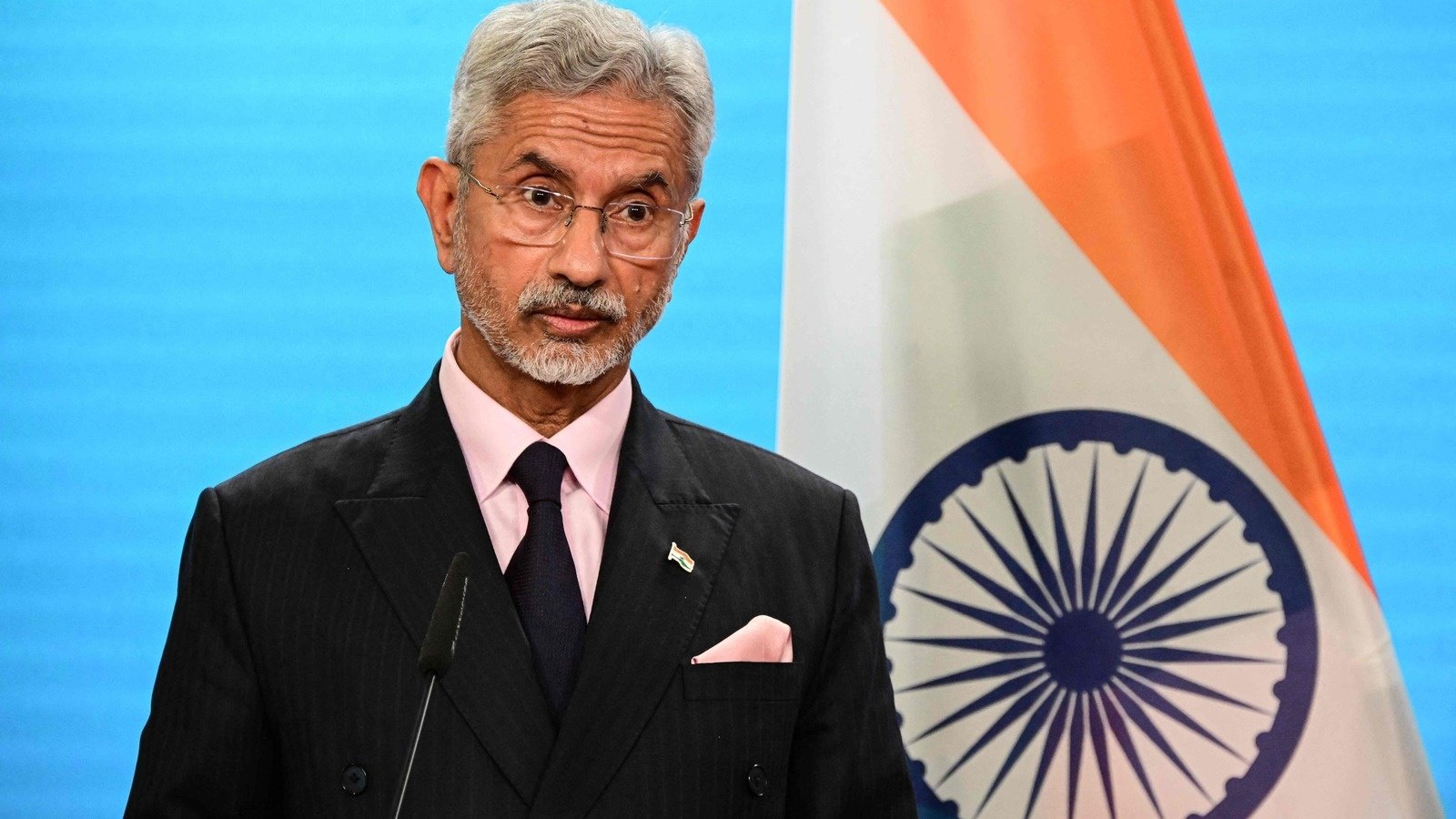
HELSINKI — External Affairs Minister S. Jaishankar has delivered a sharp critique of Western foreign policy inconsistencies, firmly defending India’s strategic procurement of Russian crude oil as an act of national interest and global market stabilization.
Speaking at the Kultaranta talks during an official visit to Finland, Jaishankar rejected Western criticism of New Delhi’s energy trade, revealing that Washington itself had originally requested Indian intervention to keep global oil prices manageable.
Challenging the Morality of Trade Sanctions
Responding directly to a journalist’s assertion that India was “too sympathetic” to Moscow, Jaishankar dismissed the moral framing often applied to the country’s energy choices. He emphasized that the United States has routinely altered its stance on Russian oil restrictions whenever its own domestic economy or global energy supplies faced instability.
“Right now, if you see, after having first put tariffs on us for buying Russian oil, the US then again lifted its sanctions,” Jaishankar stated, urging observers to look past political rhetoric. “Let’s not pretend there’s some great principle involved here. I don’t think making this about sanctimony is really warranted.”
The Foreign Minister outlined the severe market distortions that took place immediately following the outbreak of the Russia-Ukraine conflict in 2022:
-
The Stabilization Request: Jaishankar revealed that during the initial phase of the conflict, the US explicitly asked India to buy Russian oil to ensure global energy markets did not collapse from sudden supply shocks.
-
Supply Chain Displacement: “At that point of time, much of the oil available in the market was from Russia because Europeans were essentially buying up Middle East oil, which was our traditional supplier,” he explained. “Circumstances pushed us in a certain direction.”
-
Commercial Realism: Reaffirming India’s sovereign right to secure affordable resources for its citizens, he noted, “I buy oil based on cost and availability,” describing Russia as a historically steady energy supplier.
Tariffs, Waivers, and Shifting Red Lines
The trade dynamic between Washington and New Delhi has faced significant headwinds over the past year. The U.S. administration had previously imposed heavy tariffs on Indian imports—peaking at 50%—which included a 25% economic penalty specifically tied to India’s acquisition of Russian crude.
Following intense bilateral negotiations, those tariffs were systematically scaled back: first down to 18% during interim trade framework talks in February, and subsequently to 10% following a U.S. Supreme Court ruling.
Furthermore, following the outbreak of recent geopolitical conflicts in Iran and the broader Middle East, Washington enacted temporary waivers on Russian seaborne oil to insulate “energy-vulnerable” countries and prevent a global surge in crude prices. However, New Delhi has maintained an independent, non-reactive stance on these shifting policy mandates.
“Regarding the American waiver on Russia, I would like to emphasise that we have been purchasing from Russia earlier… before waiver also, during waiver also, and now also.” — Sujata Sharma, Joint Secretary, Ministry of Petroleum and Natural Gas
Addressing European Defense Export Contradictions
Jaishankar did not limit his critique to transatlantic trade policy; he also leveled sharp criticism at European nations for what he termed “moral ambiguity” regarding global security and defense exports.
When questioned about India’s neutral diplomatic posture on European security concerns, the minister countered by pointing out the historical flow of hardware in the global defense market.
“No European country has been attacked with Indian weapons. I wish I could say that for Europe weapons vis-à-vis India,” Jaishankar remarked pointedly. “Europe sells weapons, which are used to attack India. Not just now but for many years. We Indians have never done anything to endanger Europe. I think that’s a reasonable point.”
The remarks underscore a mature, highly pragmatic phase in India’s foreign policy—one centered on commercial viability, structural energy security, and an explicit rejection of unilateral Western economic mandates.