



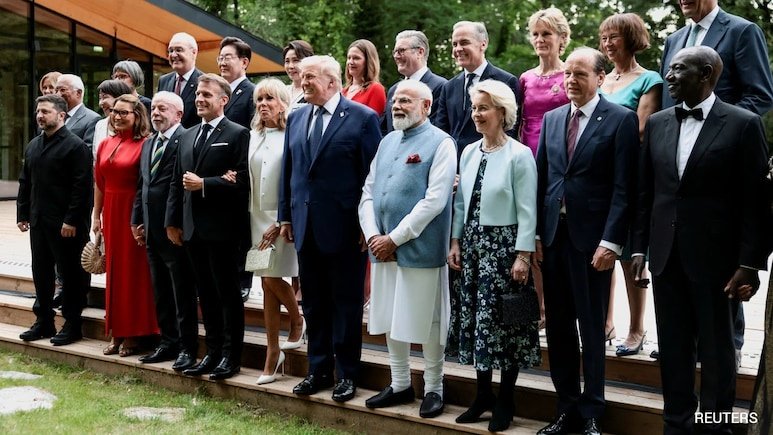
EVIAN, FRANCE — Marking their first face-to-face interaction in nearly 16 months, Indian Prime Minister Narendra Modi and US President Donald Trump stood side-by-side during the traditional G7 leaders’ “family photo” session on Tuesday. Against the backdrop of the high-stakes summit in Evian, PM Modi injected a moment of brief levity when, as photographers checked if the delegation was set, he replied: “We are always ready.”
While the public exchange appeared cordial, the summit takes place against a backdrop of mounting economic and security friction between New Delhi and Washington.
A Shifting Diplomatic Dynamic
The interaction at Evian represents a clear departure in tone from the highly animated, high-energy meetings that characterized the duo’s previous encounters:
-
The Formal Greeting: Moving away from the warm hugs seen during past state visits, PM Modi and President Trump exchanged a measured handshake and a brief conversation before taking their designated spots alongside other global heads of state.
-
The Interregnum: This encounter marks their first physical meeting since February 2025, when PM Modi traveled to the White House shortly after Trump assumed his second presidential term.
-
The Guest Framework: India is participating in the summit as an invited guest nation, alongside a select group of key global south economies including Brazil, Kenya, South Korea, and the United Arab Emirates (UAE).
Strategic Friction: Tariffs and Geopolitical Fallout
Despite the outward optics of alignment, the bilateral relationship is navigating a complex phase, weighed down by recent unilateral US economic policies and a fatal maritime escalation.
Anticipation Builds for Bilateral Bilat
The global community is closely watching Evian as officials work to finalize a dedicated bilateral meeting between Modi and Trump on the sidelines of the main G7 event.
The Summit Agenda: The upcoming closed-door talks are expected to confront the trade and maritime security crises head-on, while attempting to insulate core bilateral tracks—including joint defense manufacturing, critical technology transfers, and Indo-Pacific security cooperation—from the current diplomatic turbulence.