



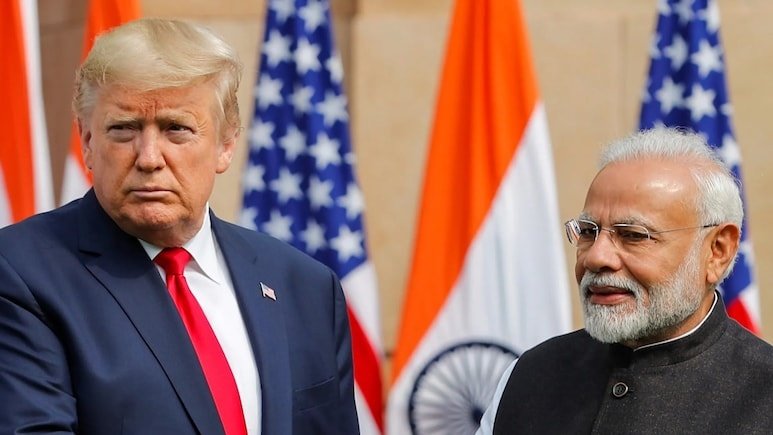
WASHINGTON — A newly published book has revealed that US President Donald Trump rejected a strategic proposal by Vice President JD Vance to deploy Indian and Saudi Arabian troops as peacekeeping forces in Ukraine to enforce a potential ceasefire with Russia.
The disclosure features in “Regime Change: Inside the Imperial Presidency of Donald Trump”, authored by The New York Times journalists Maggie Haberman and Jonathan Swan. The book details a high-stakes Oval Office meeting on January 30 last year—just ten days after the administration’s inauguration—where top officials debated the White House strategy to fulfill Trump’s campaign promise of ending the Russia-Ukraine war within 24 hours.
The Debate Over NATO vs. Non-European Troops
During the strategy session, Retired Lieutenant General Keith Kellogg, serving as the special envoy for Russia and Ukraine, presented a blueprint titled “America First Plan: Trump’s Historic Peace Deal for Russia-Ukraine War.” Kellogg’s plan initially recommended that European nations, specifically the United Kingdom, France, and the Netherlands, supply the boots on the ground for a buffer-zone peacekeeping mission.
However, Vice President JD Vance strongly objected to involving North Atlantic Treaty Organization (NATO) member states, arguing that a Western military presence would provoke an aggressive backlash from Moscow. Only a week prior, Russian Foreign Minister Sergey Lavrov had declared the deployment of NATO forces inside Ukraine as “completely unacceptable.”
Seeking an alternative, Vance reportedly questioned the room:
“Are there troops from other countries that could serve this purpose?”
He then specifically suggested utilizing non-aligned global powers, putting forward India and Saudi Arabia as ideal candidates to police the ceasefire.
“The Indians Won’t Do That”
According to the book’s excerpts, President Trump chuckled at the Vice President’s suggestion and immediately shot down the idea of a New Delhi-backed deployment, citing fiscal and political pragmatism:
“The Indians won’t do that… won’t pay for something like that,” Trump reportedly stated, before shifting the conversation to highlight his close personal equations with Indian Prime Minister Narendra Modi.
India’s Stand on the Conflict
While the proposal was dismissed internally by the White House and never formally extended to New Delhi, India’s statutory foreign policy has consistently resisted military interventions outside of United Nations mandates.
-
Diplomatic Bilaterals: Days after this internal White House meeting, PM Modi met President Trump in Washington, D.C., where the Ministry of External Affairs (MEA) reiterated India’s firm stance that “this is not an era of war” and that a resolution cannot be achieved on the battlefield.
-
Domestic Discourse: The concept of Indian intervention did briefly surface in domestic political circles. Member of Parliament Shashi Tharoor suggested at a private event in Delhi that India should look to contribute small-scale stabilization forces if a formal ceasefire materialized, stating, “Look beyond Europe for your peacekeeping… this is where India could come in.”
While the Indian Armed Forces represent one of the largest historic contributors to global peacekeeping—with extensive experience anchoring UN missions in South Sudan, Somalia, and Lebanon—New Delhi’s established doctrine remains firmly opposed to participating in any unilateral or non-UN-sanctioned military monitoring coalitions.