



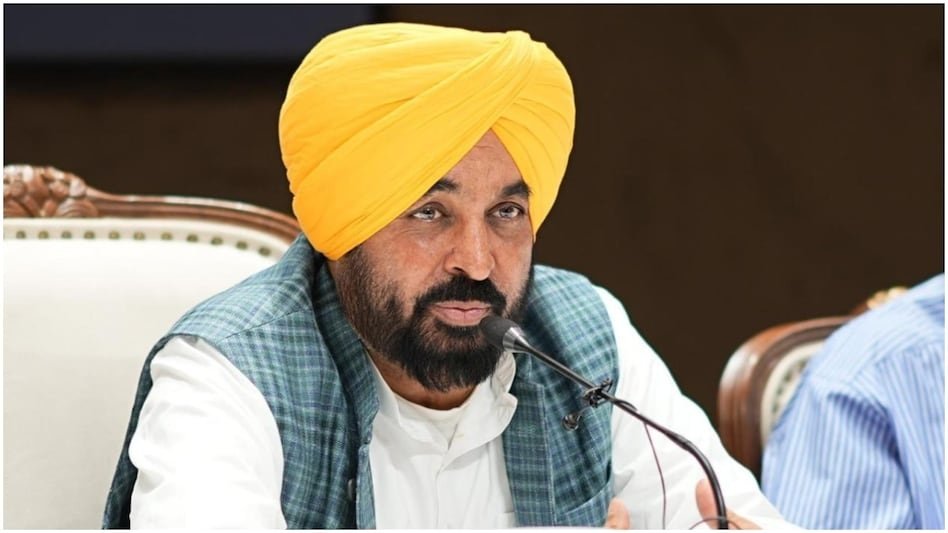
CHANDIGARH — The political landscape in Punjab has witnessed a sharp realignment following a critical directive from the Akal Takht Jathedar, giving the ruling Aam Aadmi Party (AAP) government a strict one-month ultimatum to review and amend its recently passed anti-sacrilege legislation.
What the Bhagwant Mann-led administration anticipated would be a major legislative victory ahead of next year’s assembly elections has quickly transformed into a significant political challenge, exposing the government to intense institutional and opposition scrutiny over its lawmaking process.
The Core Controversy: Process Under Scrutiny
The Akal Takht Jathedar’s intervention goes beyond the legal mechanics of the bill, directly questioning whether lawmakers thoroughly read, debated, and examined the legislative draft before putting it to a vote.
Key Elements of the Escalation:
-
The Ultimatum: A 30-day window mandated by the Akal Takht to review the anti-sacrilege law.
-
The Administrative Vulnerability: Allegations that the high-stakes bill was pushed through the Punjab Assembly without sufficient consultation with legal experts, Sikh scholars, and religious stakeholders.
-
The Political Dilemma: If the AAP government yields and amends the law, it risks validating opposition claims of legislative incompetence; if it resists, it faces friction with the highest temporal seat of Sikh authority.
A United Opposition Front Capitalizes on the Friction
The development has provided a powerful rallying point for Punjab’s fragmented opposition, bringing traditional rivals—the Congress and the Shiromani Akali Dal (SAD)—onto a shared platform to corner the ruling party.
1. Congress Mounts Pressure on Governance
Led by Leader of the Opposition Partap Singh Bajwa, alongside senior leaders Sukhpal Singh Khaira and Pargat Singh, the Congress has launched an aggressive campaign accusing the AAP of bypassing democratic norms. The party is using the issue to chip away at the AAP’s 2022 campaign promise of delivering a transparent, accountable, and calculated administration.
2. Shiromani Akali Dal (SAD) Seeks Political Resurgence
For the Akali Dal, which has historically positioned itself as the custodian of Sikh panthic interests, this controversy offers a critical window to regain lost political ground.
-
SAD MLA Ganieve Kaur Majithia formally escalated the matter to the Akal Takht Jathedar, stating she was absent during the vote due to a lack of structured debate.
-
Majithia further alleged that the treasury benches rushed the proceedings and failed to maintain appropriate decorum and respect toward women legislators during the session.
The Enduring Influence of Religious Institutions
This episode underscores the unique socio-political fabric of Punjab, where matters concerning sacrilege and religious sentiments remain deeply sensitive. The Akal Takht’s directive emphasizes that secular governments must navigate panthic issues through deep consensus rather than majoritarian legislative maneuvers.
| Political Entity | Current Strategic Stance |
| Aam Aadmi Party (AAP) | On the defensive; forced into a 30-day course-correction window to mitigate electoral fallout. |
| Indian National Congress | Aggressively questioning the legislative process to detach traditional Sikh voters from AAP. |
| Shiromani Akali Dal (SAD) | Leveraging panthic sentiments to reclaim its core constituency after recent electoral setbacks. |
The Month Ahead: Damage Control or Deeper Crisis?
The next four weeks will be crucial for Chief Minister Bhagwant Mann’s administration. To neutralize the joint opposition onslaught, the government will likely need to initiate immediate, high-visibility roundtables with religious heads, constitutional experts, and community scholars.
Failure to build a watertight consensus during this review period will give the opposition a powerful narrative to frame the ruling government as hasty and disconnected from state traditions, making this controversy a defining fault line for the upcoming election cycle.