



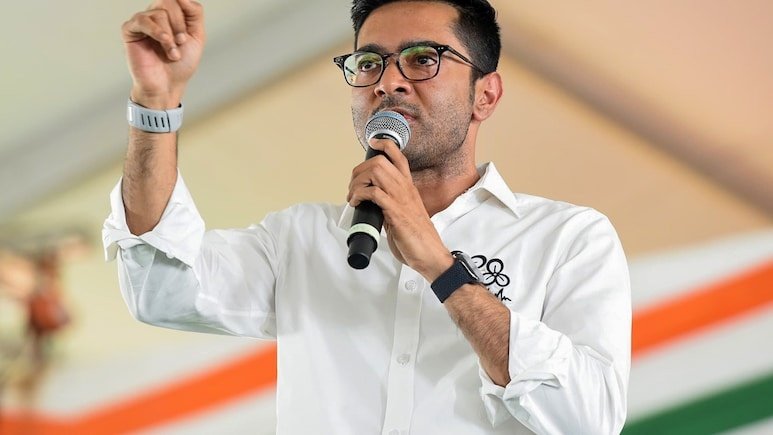
KOLKATA — In a dramatic political escalation following the Trinamool Congress’s (TMC) massive defeat in the 2026 West Bengal Assembly elections, party national general secretary Abhishek Banerjee has challenged rebel leaders to return to the Mamata Banerjee camp, promising to resign from his party post within an hour if they do.
The open challenge arrives during an unprecedented organizational split, with Chief Minister Mamata Banerjee facing a major rebellion that threatens her control over the party’s formal structure, symbol, and financial assets.
The Ultimatum and Allegations of Central Immunity Deals
Addressing the continuous stream of defections post-election, the Diamond Harbour MP characterized the departures as calculated maneuvers to escape federal corruption probes rather than genuine ideological disagreements:
-
The One-Hour Challenge: “Those who left the party and are now abusing or blaming me today, I challenge them to return to Didi. If they do, I will resign from my party post within one hour,” Banerjee announced, daring dissidents to make their move before the upcoming July 21 Martyrs’ Day rally.
-
The Saffron Shield: Banerjee claimed that the defectors negotiated explicit arrangements with the Bharatiya Janata Party (BJP)—breaking away from the TMC solely to secure political protection from the Enforcement Directorate (ED) and the Central Bureau of Investigation (CBI).
-
Defying Delhi’s Power: Pointing to his own legal battles, Banerjee noted that despite numerous state and central agency summonses and FIRs, he remained loyal to the high command. He stated that in a democracy, he would only bow before the electorate, never before the powerful leadership sitting in New Delhi.
Escalating Internal War and Rebel Pushback
Abhishek’s conditional offer of readmission has exposed sharp, deep-seated divisions between old-guard loyalists and breakaway factions within the broader Trinamool framework:
-
The Loyalists’ Veto: In a direct public counter to Abhishek’s statement, veteran TMC MP Kalyan Banerjee voiced fierce opposition during a party workers’ layout in Bankura. He warned that if any defectors who turned their backs on Mamata Banerjee are allowed back into the fold, he would immediately resign from the party himself.
-
The Rebel Rebuttal: Lawmakers aligned with the breakaway Ritabrata Banerjee faction quickly hit back. Assembly chief whip Akhruzzaman remarked that dedicated grassroots workers had spent years warning the Chief Minister to choose organizational merit over family lineage, adding that the current collapse is the direct result of her choice.
-
Opposition Reaction: The BJP dismissed the resignation offer entirely. State leader Sukanta Majumdar called the challenge empty rhetoric, predicting that the internal civil war would soon leave the Kalighat faction with no one remaining except the aunt-nephew duo (“Pishi and Bhaipo”).
Structural Exodus Across State and Parliament
The fallout from the assembly election loss has severely depleted the TMC’s legislative numbers, creating parallel power structures:
-
Lok Sabha Fractures: A powerful bloc of 20 rebel MPs—including veteran party mainstays Sudip Bandyopadhyay and Kakali Ghosh Dastidar—severed ties with the core party to merge with the Nationalist Citizens Party of India (NCPI), shifting their critical numbers to back the BJP-led NDA.
-
Rajya Sabha Departures: The party lost three upper house MPs to the BJP via snap bypolls, followed closely by the high-profile resignation of actor-turned-politician Rukmini (Koel Mallick), who vacated her Rajya Sabha seat without attending a single session.
-
Grassroots Defections: Regional heavyweights Firhad Hakim, Aroop Biswas, Anubrata Mondal, and Madan Mitra have fully transitioned into the rebel Ritabrata Banerjee camp. Operating as the self-proclaimed “real Trinamool,” this faction is now launching aggressive legal and political maneuvers to claim ownership of the official party symbol and funds, pushing West Bengal’s ruling apparatus into unmapped political territory.