



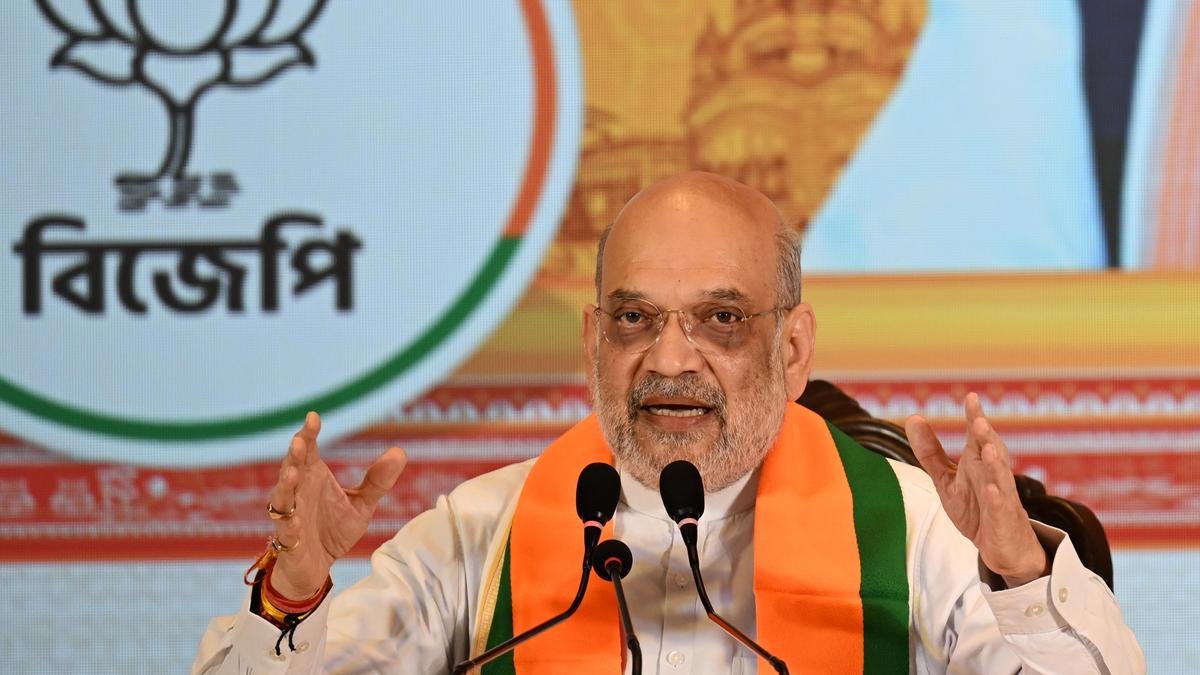
JALANDHAR — Setting the tone for the upcoming 2027 Punjab Assembly elections, Union Home Minister Amit Shah launched a scathing attack on the Aam Aadmi Party (AAP) administration on Wednesday, pledging to eradicate Punjab’s longstanding narcotics crisis by December 31, 2029, should the Bharatiya Janata Party (BJP) be voted into power.
Addressing a large gathering in Jalandhar to mark the culmination of the party’s month-long “Nasha Mukt Punjab Yatra,” Shah positioned the drug menace alongside law and order, systemic corruption, and agrarian distress as the primary pillars of the BJP’s electoral campaign in the border state.
A Definitive Anti-Drug Roadmap
Directly appealing to the state’s youth, Shah offered a concrete political benchmark for the party’s anti-narcotics campaign, directly accusing Chief Minister Bhagwant Mann of exacerbating the trade rather than curbing it.
“I promise the youth of Punjab that if you vote for the BJP, we will make Punjab drug-free before December 31, 2029,” Shah declared, asserting that the party would dismantle drug syndicates while generating sustainable employment opportunities.
Invoking emotional testimonies from his interactions during the yatra, the Home Minister recounted meetings with grieving families, including a mother carrying photographs of her two deceased sons lost to substance abuse. He emphasized that the anti-drug drive extends beyond political expediency, framing it as an existential imperative for the state’s future.
Shah further alleged that the Punjab government had failed to take critical institutional steps, claiming that no dedicated anti-drug review meetings had been convened by the state executive in the past three years. He also noted that administrative proposals put forward by the Central government to combat cross-border trafficking were repeatedly rejected by the state leadership.
Multi-Front Critique: Corruption, Mining, and Publicity
Extending his critique beyond narcotics, the senior BJP leader targeted the AAP leadership on broader governance issues:
-
Publicity Spending: Shah alleged that the state exchequer is losing approximately ₹785 crore annually to external advertisement and publicity campaigns.
-
Resource Revenue: He cited a net decline in state mining revenues, alleging rampant illegal mining despite election promises to regularize the sector.
-
Delhi Excise Policy: Raising questions over ongoing graft investigations, Shah argued that leaders entangled in liquor policy controversies lack the moral standing to combat substance abuse in Punjab.
Agrarian Commitments and National Security
Reaching out to Punjab’s agrarian base, Shah contrasted AAP’s unmet promise of providing Minimum Support Price (MSP) across 26 crops with neighboring Haryana, where he noted state-level policy mechanisms successfully deliver MSP coverage. He assured that a BJP-led administration would deliver a “permanent solution” to agricultural concerns.
Closing his address, the Home Minister linked Punjab’s socio-economic recovery to its historical role in national security, lauding the valor of the state’s armed forces personnel:
-
Defense Heritage: Shah highlighted the sacrifices made by Punjabi soldiers before and after Independence.
-
Frontline Legacy: He noted that the battle cry “Jo Bole So Nihal” remains a symbol of military resilience that continues to deter adversarial forces along the border.
The Political Outlook
By establishing a hard December 31, 2029 deadline, the BJP has signaled a strategic shift toward a security- and governance-focused narrative in Punjab. As the state moves closer to the 2027 electoral battle, the opposition’s campaign appears designed to force the incumbent AAP government onto the defensive regarding its administrative record, law enforcement capabilities, and fiscal management.