



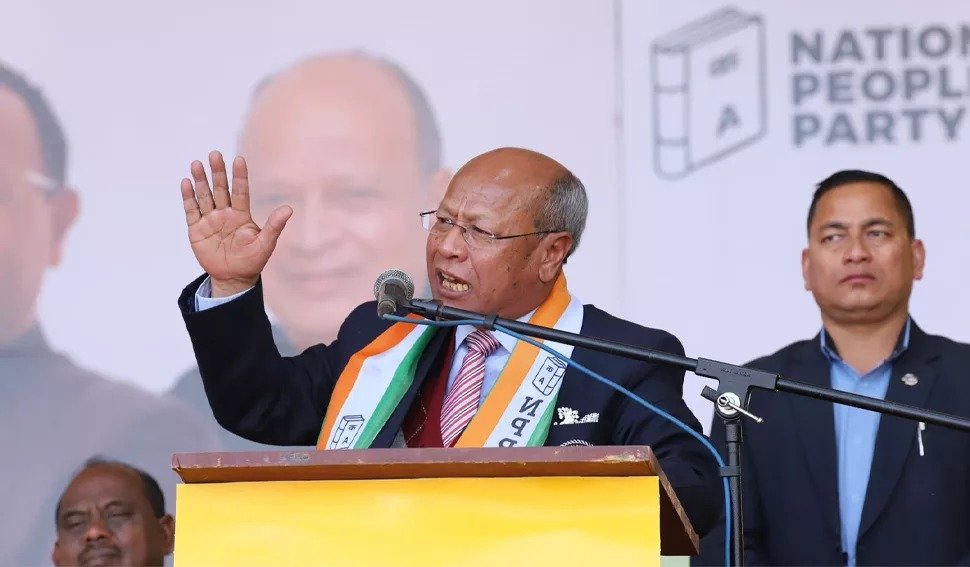
GUWAHATI — Meghalaya Deputy Chief Minister and National People’s Party (NPP) chief Prestone Tynsong has urged the Joint Parliamentary Committee (JPC) examining proposed amendments to the Foreign Contribution (Regulation) Act (FCRA) to take on board the apprehensions raised by various non-governmental organizations and Christian bodies across the Northeast.
Clarifying that the impact of the proposed legal framework extends well beyond religious institutions, Tynsong emphasized that the revised compliance measures will have far-reaching implications for all civil society groups dependent on foreign aid.
Welcoming Parliamentary Scrutiny
Tynsong endorsed the Centre’s decision to refer the draft legislation to a JPC for comprehensive review, expressing confidence that the panel will address local anxieties before finalizing its report.
-
State Representation: The Deputy Chief Minister welcomed the inclusion of Meghalaya MP James PK Sangma as a special invitee to the parliamentary panel, assuring that the state’s socio-economic realities will be adequately represented during deliberations.
-
Balanced Framework: Tynsong underscored the need for a legislative framework that balances national security and regulatory transparency with the operational needs of genuine non-profit organizations.
Concerns Over Remote Infrastructure and Social Welfare
The parliamentary review comes against the backdrop of growing unease among church leaders, community organizations, and rural welfare groups across Meghalaya. Local stakeholders caution that stringent FCRA provisions could disrupt critical social infrastructure in remote, border-adjacent districts.
-
Essential Services: Foreign contributions heavily sustain private and community-run schools, colleges, hostels, and healthcare centers in far-flung areas where state-run infrastructure remains thin.
-
Geographical Challenges: Civil society leaders have petitioned the Union government to factor in Meghalaya’s rugged terrain and logistical hurdles when framing compliance rules, ensuring welfare programs do not face sudden administrative bottlenecks.
Political Friction Over Foreign Outreach
The ongoing debate over the draft law has also ignited a sharp political controversy in the state following statements by Congress MP from Tura, Saleng Sangma.
Earlier this week, the opposition lawmaker disclosed that he had engaged with international representatives — including delegates from the United States, Australia, South Korea, the United Kingdom, Mexico, and several African nations — urging them to raise concerns over the proposed amendments with New Delhi.
While the MP confirmed he had also submitted memoranda to Union Ministers, President Droupadi Murmu, and Vice-President CP Radhakrishnan, his appeal for external intervention drew sharp criticism from political quarters over internationalizing domestic legislative matters.
State Response: Dedicated FCRA Cell Established
Responding to growing anxieties, Chief Minister Conrad K. Sangma affirmed that the Meghalaya government is maintaining constructive dialogue with the Centre to safeguard the interests of public welfare organizations.
To assist local institutions, the Chief Minister announced the creation of a specialized FCRA Cell under the state Home Department. The dedicated unit will serve as an administrative bridge, guiding genuine non-profit bodies through application, documentation, and compliance fast-tracking to ensure uninterrupted operations across the state.