



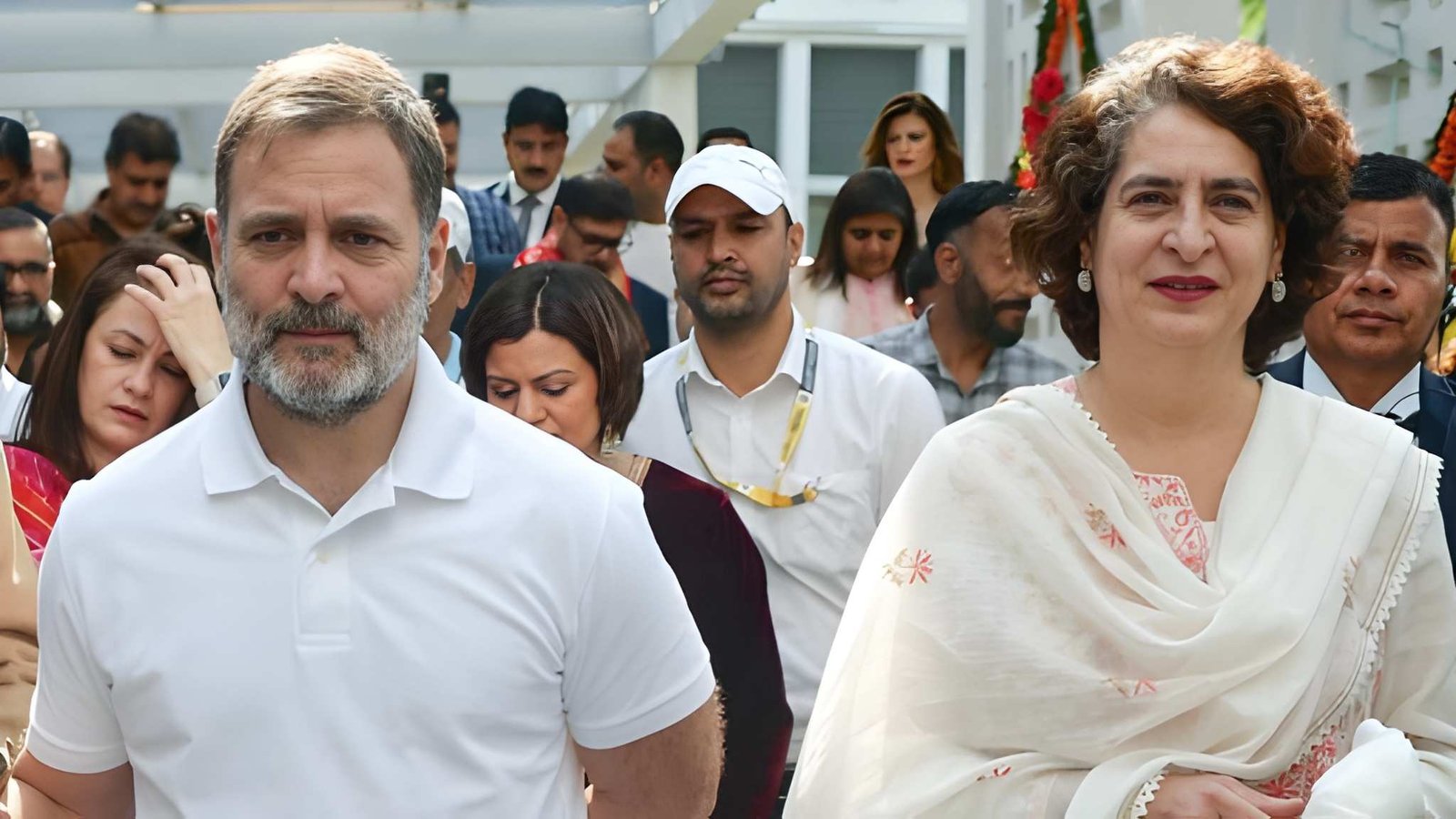
NEW DELHI — Senior Congress leaders staged a seven-hour sit-in at the Parliament Street Police Station, securing a First Information Report (FIR) regarding alleged pellet-gun injuries sustained by 19-year-old student protester Sahil Lochab during a July 20 demonstration.
Leader of the Opposition Rahul Gandhi and MP Priyanka Gandhi Vadra executed complementary roles during the high-visibility protest. While Rahul Gandhi maintained a direct public stance outside the police station demanding accountability, Priyanka Gandhi led internal discussions with legal advisors and senior law enforcement officials to resolve procedural obstacles. The Delhi Police subsequently registered the case against unknown persons under relevant provisions of the Bharatiya Nyaya Sanhita (BNS).
Core Protest & Legal Developments
-
The Incident: 19-year-old Sahil Lochab suffered metallic pellet injuries during a July 20 student protest march. Medical reports from AIIMS confirmed multiple metallic pellets embedded in his body and significant vision impairment.
-
Demonstration Execution: Rahul Gandhi accompanied Lochab and his family to the Parliament Street Police Station to demand an immediate FIR. Following initial procedural delays from law enforcement citing ongoing judicial reviews, Congress leadership initiated an impromptu sit-in.
-
Dual Strategy: Rahul Gandhi remained the public face of the demonstration alongside party supporters outside, while Priyanka Gandhi managed legal strategy alongside senior party advocates and negotiated directly with police administration.
-
Police Action & Charges: Following a seven-hour standoff, Delhi Police formally registered the FIR under Sections 118 and 125 of the Bharatiya Nyaya Sanhita (BNS) to investigate the source of the firing.
-
Political Response: Congress leaders framed the FIR registration as an essential first step toward justice for student protesters, while opposition political figures characterized the demonstration as disruptive political posturing.