



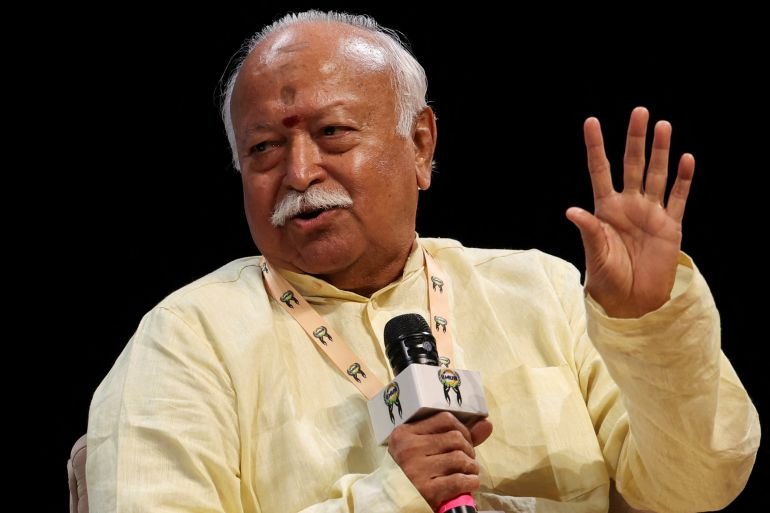
BHOPAL — Addressing a large gathering of young citizens at the Yuva Dharma Sansad in Ujjain, Rashtriya Swayamsevak Sangh (RSS) chief Mohan Bhagwat issued a strong warning against arrogance and ego, emphasizing that true dharma lies in personal discipline, civic duties, and mutual respect rather than mere rhetoric or ritual.
The RSS chief’s address arrived on the eve of Opposition Leader Rahul Gandhi’s Chhatron Ki Goonj student event in nearby Indore, adding political resonance to Bhagwat’s observations on leadership, self-restraint, and civic duty across Madhya Pradesh.
Core Highlights of Mohan Bhagwat’s Address
-
Warning Against Arrogance: Bhagwat cautioned against the destructive nature of ego, stating that those driven by pride falsely believe their authority is absolute and that the world must bend to their individual will.
-
Redefining Gen Z’s Relationship with Dharma: Expressing optimism over youth participation, the RSS chief rejected the notion that spiritual or ethical scriptures like the Bhagavad Gita and Ramayana are reserved for retirement, noting that fundamental ethics guide humanity from birth.
-
Living Conduct Over Bookish Knowledge: Defining dharma as manav dharma (duty of humanity) and raj dharma (duty of governance), Bhagwat stressed that moral frameworks exist through everyday behavior and duty rather than lectures or printed text.
-
Pluralism and Faith: Reaffirming commitment to religious tolerance, Bhagwat stated that while individuals should remain steadfast in their traditional forms of worship, they must extend equal respect to other faith traditions without seeking forced conversions.
Civic Ethics and the Nature of Duty
Outlining the core tenets of his address, Bhagwat framed ethical conduct as an inescapable law of nature, comparing its certainty to the daily rising and setting of the sun:
        THE RSS CHIEF'S FOUR PILLARS OF ETHICAL CONDUCT
┌─────────────────────────┬──────────────────────────────────────────┐
│ Universal Duty          │ Uplifting humanity and preventing societal │
│                         │ fragmentation                            │
├─────────────────────────┼──────────────────────────────────────────┤
│ Mutual Respect          │ Honoring diverse paths of worship        │
│                         │ without compromising one's own faith     │
├─────────────────────────┼──────────────────────────────────────────┤
│ Practical Action        │ Manifesting values through daily duty    │
│                         │ rather than abstract sermons             │
├─────────────────────────┼──────────────────────────────────────────┤
│ Humility in Governance  │ Rejecting the illusion that any single   │
│                         │ individual holds absolute control        │
└─────────────────────────┴──────────────────────────────────────────┘
Bhagwat concluded by encouraging the youth to integrate spiritual discipline with material progress, reinforcing that a stable society relies on citizens fulfilling their respective duties toward the collective good.