



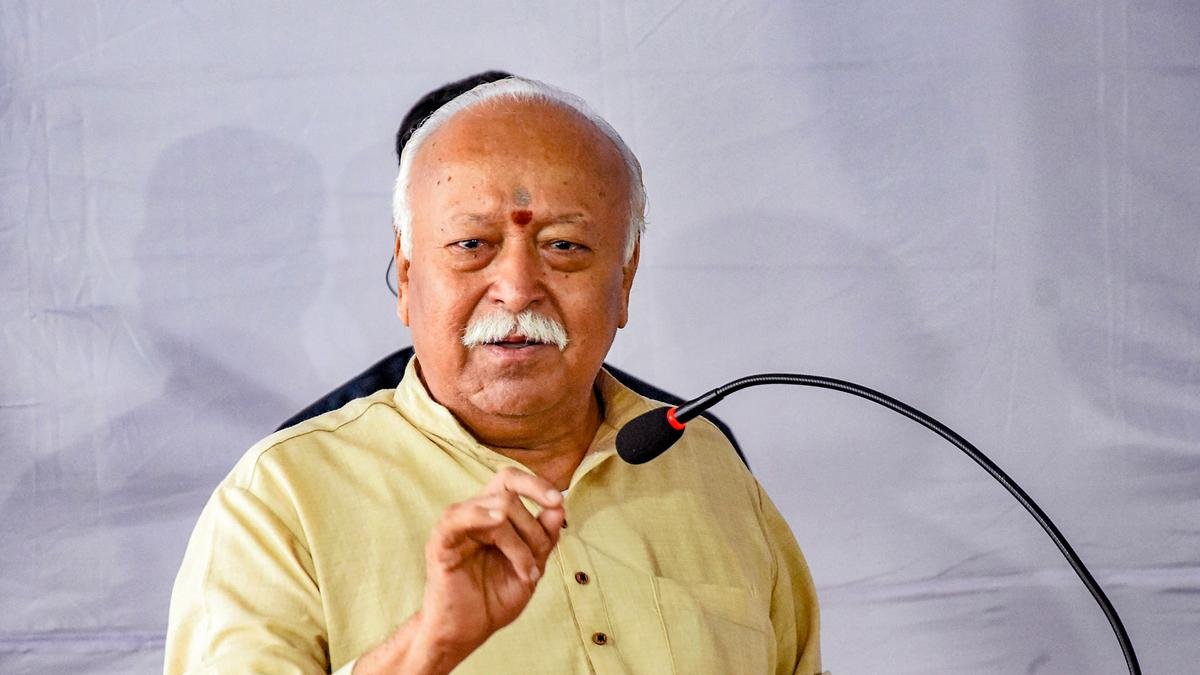
NEW DELHI — Rashtriya Swayamsevak Sangh (RSS) chief Mohan Bhagwat declared on Friday, November 27, 2026, that a deficit of compassion is the underlying source of all national and international troubles, urging a “globalisation of compassion” to foster lasting peace.
Addressing the launch of Nobel laureate Kailash Satyarthi‘s book, Karunanayak Ram, Bhagwat remarked that every conflict—whether inside India or abroad, in the past, present, or future—traces back to an absence of karuna (compassion). He noted that he first encountered the phrase “globalisation of compassion” through Satyarthi and emphasized how vital that vision has become today.
Lessons From the Ramayana on Ego and Human Oneness
Invoking the Ramayana to contrast destructive pride with selfless empathy, Bhagwat explained how narrow self-interest fuels strife:
-
Ravan’s Ego vs. Ram’s Compassion: Bhagwat observed that the core difference between Ravan and Lord Ram lay in their guiding impulses—Ravan was driven by ahankar (ego), whereas Ram embodied karuna (compassion).
-
Root of Wars and Strife: Explaining ego as an inability to rise above “I and mine,” he stated that wars and conflicts emerge directly from that self-centered outlook.
-
Shared Inner Unity: While people differ externally in appearance, skin tone, and behavior, Bhagwat affirmed that humanity is bound together from within as one unified whole—describing this oneness as an eternal reality and noting that no individual or country can experience true happiness while the broader world and environment suffer.
Compassion as Dharma and India’s Role
Characterizing compassion as the natural instinct of humanity when people recognize their shared interconnectedness rather than an exceptional trait, Bhagwat linked the message to India’s civilizational traditions. He stated that compassion represents the timeless form of dharma and stressed that India must now take the lead by sharing with the world, concluding that the moment has arrived for India to give.