



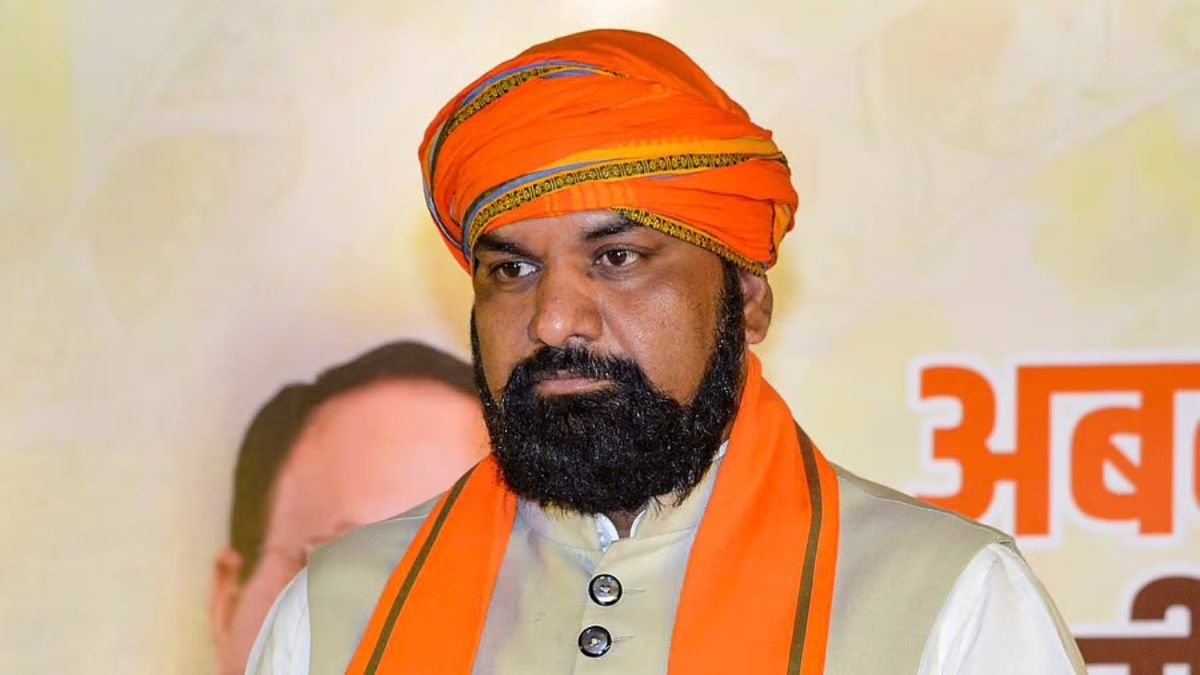
PATNA – In a landmark political transition, Samrat Choudhary was sworn in today as the Chief Minister of Bihar, becoming the first leader from the Bharatiya Janata Party (BJP) to hold the state’s top office. The oath of office was administered by Governor Syed Ata Hasnain at Lok Bhavan, marking the beginning of a new chapter for the NDA in the Hindi heartland.
The elevation follows the resignation of Nitish Kumar, the state’s longest-serving Chief Minister, who has transitioned to the Rajya Sabha. Kumar expressed his support for the new administration, stating that the government would have his “full cooperation and guidance.”
Strategic Leadership and Demographic Roots
At 57, Choudhary’s appointment is seen as a strategic move to consolidate the BJP’s influence among the Backward Classes.
-
Caste Dynamics: Choudhary belongs to the Kushwaha (Koeri) community, the second-largest OBC group in Bihar. His leadership fulfills a reported request from the JD(U) to appoint a Chief Minister from this influential demographic.
-
Political Legacy: He is a second-generation politician; his father, Shakuni Choudhary, was a six-time MLA, and his mother, Parvati Devi, also served as a legislator.
-
Career Trajectory: Since entering politics in 1990, Choudhary has held roles in the RJD and JD(U) before joining the BJP in 2017. He served as Deputy Chief Minister immediately prior to this appointment.
The “Hindi Heartland” Map
With this development, the BJP now holds the Chief Minister’s post in every major Hindi-speaking state, including Uttar Pradesh, Madhya Pradesh, Rajasthan, Haryana, and Uttarakhand.
The transition signals the end of the “Sushasan” era dominated by Nitish Kumar’s singular leadership and sets the stage for a restructured NDA alliance focused on the upcoming 2026-2027 legislative goals and administrative reforms.