



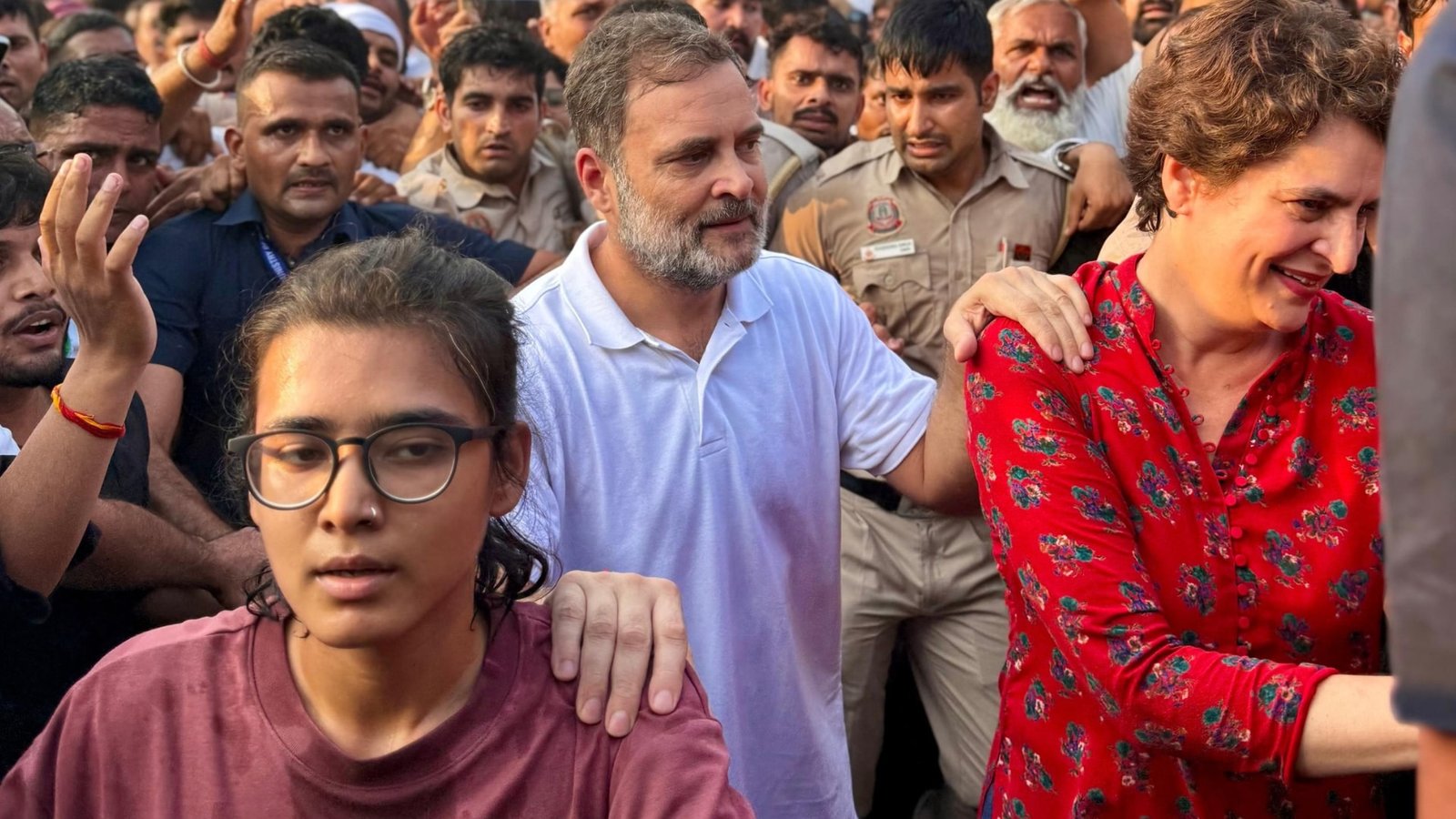
NEW DELHI — Political warfare escalated in the national capital on Thursday after the Bharatiya Janata Party (BJP) seized on recorded statements by prominent student leader Neha Bora, characterizing her references to Bangladeshi youth uprisings as explicit proof of an opposition-backed blueprint for unconstitutional “regime change.”
BJP National Spokesperson Pradeep Bhandari launched a sharp offensive against Lok Sabha Leader of the Opposition Rahul Gandhi, alleging that mainstream opposition parties are leveraging student organizations to engineer street-level destabilization rather than engaging in legitimate parliamentary dissent.
Key Takeaways
-
Controversial Video Excerpt: In circulated interview footage, student leader Neha Bora praised youth-led mobilizations in Bangladesh for showing the way on democratic and voting rights struggles across South Asia.
-
Allegations of Destabilization: BJP spokesperson Pradeep Bhandari claimed the statements reveal a calculated strategy by opposition networks to replicate foreign political upheavals within India.
-
Student Leader’s Escalating Role: Neha Bora, an All India Students’ Association (AISA) representative and JNU research scholar, has become a central figure in youth-led demonstrations targeting Chief Election Commissioner Gyanesh Kumar.
-
Opposition Solidarity: The ruling party’s attack follows joint appearances by Bora and Rahul Gandhi during opposition marches to the Supreme Court, where Congress leadership framed all parallel demonstrations as a singular movement for constitutional rights.
Rhetorical Clash over Regional Movements
The controversy centers on comments by Bora drawing explicit parallels between youth movements across South Asian borders.
In the circulated interview, the student activist commended neighboring youth demonstrations for asserting civic and electoral demands:
“The Gen Z movement we are seeing everywhere in this country first started in Bangladesh and congratulations to you for showing us the way and extending solidarity to the young people of this country… Today the movement that the young people are participating in and leading is also a movement for democratic and voting rights.”
In response, the ruling party’s media wing argued that referencing external political collapses reveals an intent to subvert elected institutions.
“Rahul Gandhi and his entire ecosystem do not wish to offer mere political resistance; they aim for regime change… They intend to replicate in India what took place in Bangladesh,” Bhandari asserted, calling for broad public opposition to such strategies.
Fusion of Youth Activism and Electoral Resistance
Bora’s prominent visibility across capital demonstrations—from summer paper-leak rallies to ongoing marches protesting the Election Commission’s Special Intensive Revision (SIR)—underlines a deepening alliance between student federations and national opposition parties.
Defending the broad coalition during a joint briefing, Rahul Gandhi rejected attempts to separate student agitation from mainstream political resistance, stating that any group mobilizing to protect constitutional safeguards receives full opposition backing as part of an overarching national movement.