



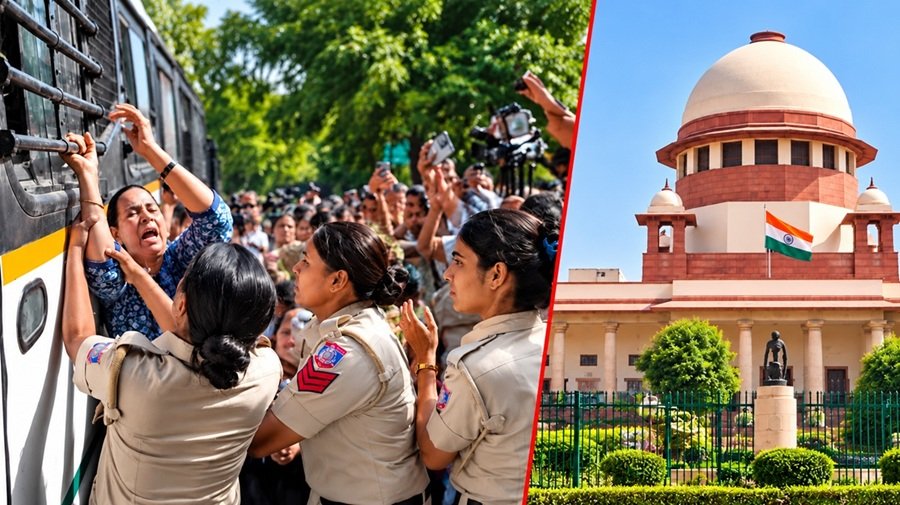
NEW DELHI — In a major legal intervention concerning press freedom and police accountability, the Supreme Court on Thursday ordered the Delhi Police to refrain from taking coercive action against an independent journalist who accused a senior police official of sexual assault during a capital demonstration.
A bench led by Chief Justice of India Surya Kant and Justice Joymalya Bagchi characterized the assault claims as grave, directing law enforcement to complete a time-bound investigation into the incident while the judiciary evaluates whether an independent investigating agency should take over the case.
Key Takeaways
-
Judicial Protection: The top court shielded the freelance reporter from arrest under a counter-FIR lodged by law enforcement following high-voltage protests in central Delhi.
-
Cross-Allegations Under Review: The case stems from the reporter’s formal sexual harassment complaint against Assistant Commissioner of Police Vivek Bhagat, which was followed by an official police complaint accusing the journalist of defamation, public humiliation, and casteist remarks.
-
Assurance of Cooperation: Solicitor General Tushar Mehta confirmed that no punitive action would be taken against the reporter during the ongoing investigation, promising to submit comprehensive Crime Branch findings directly to the court.
-
Defining Independent Media: The proceedings sparked a broader legal debate over state protection for freelance and digital journalists versus unaccredited social media creators operating at political demonstrations.
Procedural Conflict and Judicial Oversight
The Supreme Court’s intervention provided immediate relief to the journalist after the Delhi High Court declined an urgent hearing on her petition for protection earlier in the day.
During oral arguments, the Union Government’s legal team raised questions regarding the operational definition of working journalists during chaotic public assemblies:
“We don’t know who is a reel-maker and who’s a journalist… many people call themselves freelance journalists just by carrying a mic but only make reels for social media.”
Institutional Protections and Field Reporting Security
Acknowledging the growing challenges surrounding digital reporting and media accreditation, the Supreme Court highlighted the necessity of establishing clear safeguards for working reporters covering civil unrest.
“I think we all agree that the issue needs consideration, and certain categories may require an extra layer of protection,” the bench noted, adding that courts must carefully evaluate definitions to protect genuine journalistic activity without enabling abuse.
The legal standoff follows intense street demonstrations demanding the resignation of Chief Election Commissioner Gyanesh Kumar, during which multiple activists and reporters were detained by police units.