



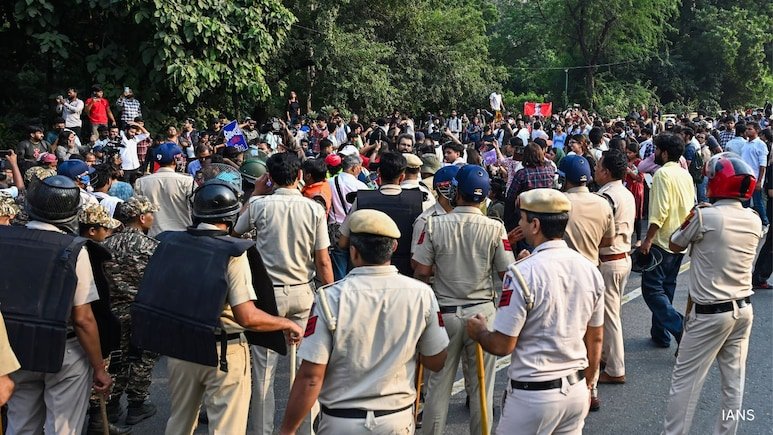
NEW DELHI — In a significant legal development regarding public assembly rights in the capital, the Supreme Court issued formal notices to the Union Government and Delhi Police on Thursday, demanding a detailed justification for the administrative decision to denotify Jantar Mantar as an authorized protest site.
A bench of the top court signaled that it will rigorously evaluate the official grounds for closing the iconic central Delhi venue, warning that judicial interventions will follow if the state’s reply fails to meet constitutional standards.
Key Takeaways
-
Judicial Notice Issued: The Supreme Court directed both the Centre and Delhi Police to file affidavits explaining the legal and administrative basis for barring demonstrations at Jantar Mantar.
-
Administrative Recommendation: Representing the Centre, Solicitor General Tushar Mehta informed the bench that the denotification followed explicit recommendations from a designated administrative committee.
-
Peripheral Venue Allocation: Following an October 11 notification, public assemblies have been redirected to three alternative sites: Ramlila Maidan, Burari Ground, and CBD Ground in East Delhi.
-
Regulatory Ambiguity: While Ramlila Maidan operates under Municipal Corporation of Delhi (MCD) management, rules governing political venue allocations by the Delhi Development Authority (DDA) for Burari and Shahdara’s CBD Ground remain under formulation.
Centralization versus Civic Space
The legal challenge comes at a time when central Delhi has seen frequent street demonstrations over competitive exam irregularities and opposition-led protests against the Election Commission’s voter revision drive.
Underlining the court’s stance on administrative accountability, the bench observed:
“We are issuing notice to the Centre, Delhi Police, seeking their reply. Let them reply. If it doesn’t satisfy, then the law will run its course.”
Relocation Challenges and Public Visibility
Critics and petitioners argue that shifting protest sites from the heart of the capital to peripheral areas like Burari and Shahdara dilutes the civic impact and visibility of peaceful public assemblies.
While Ramlila Maidan has historically accommodated massive political rallies, locations like Burari and CBD Ground have rarely hosted major civic gatherings, creating logistical and regulatory uncertainties for civil society groups seeking permits under the upcoming Standard Operating Procedures.