



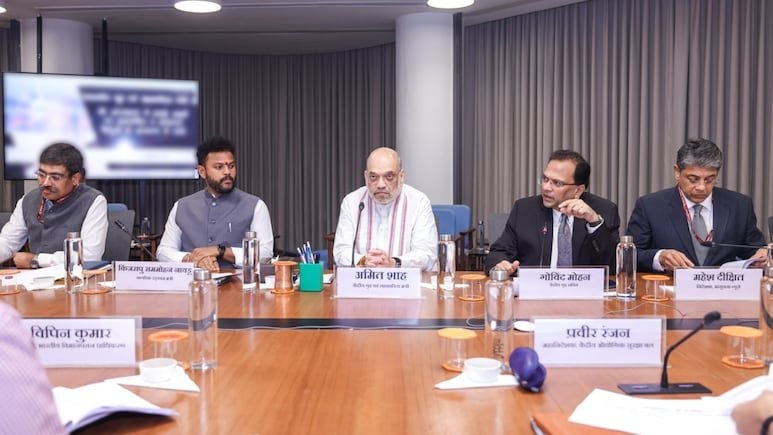
NEW DELHI — In a coordinated push to modernize India’s aviation infrastructure, Union Home Minister Amit Shah and Union Civil Aviation Minister Ram Mohan Naidu Kinjarapu have finalized a high-tech overhaul to eliminate terminal congestion, accelerate immigration, and upgrade security protocols.
The comprehensive strategy, established during a high-level review meeting with top officials from the MHA, MoCA, CISF, and Intelligence Bureau, introduces a unified framework tracking every passenger touchpoint from terminal entry gates to immigration clearance.
1. Automation and Security Upgrades at Checkpoints
To systematically reduce wait times and optimize security manpower, the government is leaning heavily into automated infrastructure:
-
Mandatory ATRS Integration: The Automatic Tray Retrieval System (ATRS) will be rolled out in a phased manner across all domestic and international airports. Going forward, the Home Ministry has mandated that all under-construction airports incorporate ATRS as a default architectural standard.
-
Certified X-Ray Personnel: To ensure zero compromise on national security, the Home Minister ordered that only CISF personnel who meet the highest educational and technical qualification benchmarks will be assigned to critical X-ray baggage screening duties.
2. Infrastructure Targets and Traffic-Linked Upgrades
The government has outlined a strict timeline to expand physical capacity across the country’s aviation network:
-
Accelerated Construction: The Civil Aviation Ministry has been directed to prioritize the completion of 21 airports currently under development, alongside targeted expansions at 41 operational airports based on Bureau of Civil Aviation Security (BCAS) traffic assessments.
-
Terminal Optimization: The Centre will establish strict mandatory norms for aerobridge availability based on localized aircraft traffic. Furthermore, automated self-baggage drop facilities, currently operational at 16 major hubs, will be expanded to all high-traffic international terminals.
3. Decentralized Immigration Network and Digital Clearance
To manage rising international passenger volumes, the Home Ministry announced a major structural expansion of India’s border management:
-
Pan-India FRRO Presence: By 2027, a fully functional Foreigners Regional Registration Office (FRRO) will be established at the headquarters of every single state to streamline services for foreign nationals.
-
New Border Checkpoints: Authorized immigration check posts are being fast-tracked for early operationalization at the upcoming Jewar Airport (Noida International) and Agartala.
-
Trusted Traveller Drive: To boost the adoption of the Fast Track Immigration – Trusted Travellers’ Programme (FTI-TTP), airlines will send automated WhatsApp registration alerts to passengers right at the time of international ticket booking for rapid clearance.
4. Peak-Season Peak Performance Audits
To maintain long-term efficiency and prevent seasonal terminal logjams, the Centre has ordered the CISF and MoCA to commission independent, third-party operational studies during peak holiday and travel seasons. These external audits will be used to scientifically isolate logistical bottlenecks and continuously refine passenger processing speeds.