



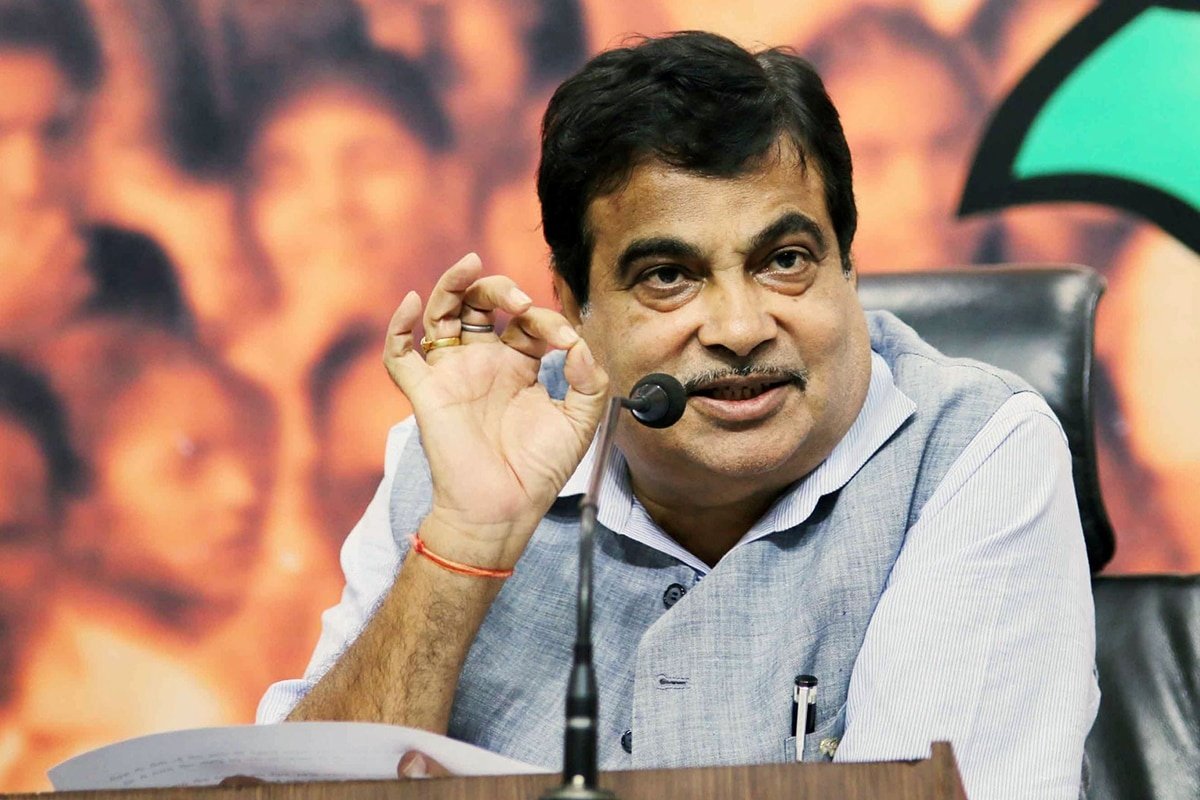
NEW DELHI — Union Road Transport and Highways Minister Nitin Gadkari has launched a high-priority, multi-state road inspection along the Delhi-Mumbai Expressway to personally evaluate structural safety protocols and engineering standards.
The ministerial review comes just a week after a horrific July 1 collision in Rajasthan’s Dausa district that left eight people dead and 28 injured, casting a spotlight on critical safety lapses along the National Highways Authority of India’s (NHAI) flagship transit corridor.
1. Ground Inspection Route and Infrastructure Review
Opting to travel directly by road rather than via air, Gadkari’s route targets several highly vulnerable sections across Rajasthan, Madhya Pradesh, and Gujarat:
-
Dausa Crash Site: The Minister is slated to inspect the exact location near Dhanawda village (Zero Point) where a speeding passenger bus rammed a decelerating cargo trailer, plunged into a gorge, and caught fire.
-
Mukundara Hills Project: The inspection includes an on-site review of the ongoing engineering work, structural integrity, and safety contingencies at the high-altitude Dara Tunnel project near Kota.
-
Multi-State Alignment Audit: The technical review will extend through contiguous packages of the expressway cutting across neighboring Madhya Pradesh and industrial hubs in Gujarat to evaluate corridor maintenance uniformity.
2. Regulatory and Design Lapses Under Scrutiny
Data compiled by regional authorities indicates that the Dausa stretch has become a major traffic hazard. In 2025, the section recorded 33 accidents resulting in 35 fatalities, while the first half of 2026 has already witnessed 24 crashes causing 26 deaths.
An eight-member District Road Safety Task Force inquiry committee, acting under Dausa District Collector Soumya Jha, identified several severe design and operational deficiencies:
-
Ambiguous Signage: Missing directional arrows at critical exits (such as the Jaipur 4C Link) confuse motorists, frequently causing drivers to overshoot their turn and slow down abruptly or attempt dangerous reversals.
-
Unreadable Typography: Exit markers placed nearly two kilometers prior to the turns feature text and arrows that are too small to be deciphered safely at high expressway speeds.
-
Broken SOS Infrastructure: Multiple emergency roadside SOS call boxes along the corridor were found to be entirely non-functional during physical audits.
-
Enforcement Gaps: Systematic lapses were reported in monitoring speed-limit violations and tracking reckless, high-speed lane-changing behavior by heavy commercial vehicles.
3. Administrative Interventions and Law Enforcement
Preliminary findings regarding the July 1 disaster suggest the involved cargo truck slowed down abruptly at Zero Point due to a complete lack of visible marking for the Jaipur-Ajmer exit, giving the trailing Haridwar-Indore bus zero reaction time.
In immediate response to the safety crisis, the Rajasthan Chief Secretary presided over emergency coordination meetings. Concurrently, law enforcement led by IG Rahul Prakash launched a massive enforcement drive to demolish and remove all illegal temporary commercial encroachments from Alwar to Dausa, mitigating peripheral blind spots along the high-speed corridor. Gadkari’s direct intervention is expected to result in a revised NHAI policy governing structural signage and automated speed enforcement across all greenfield expressways.