



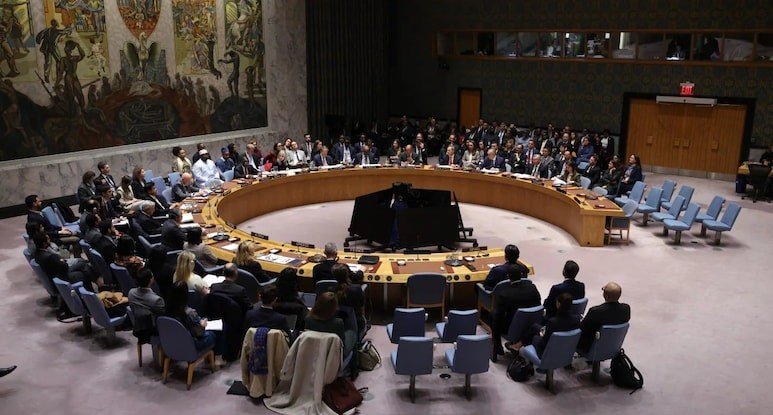
UNITED NATIONS — India has formally cautioned the international community that expanding the United Nations Security Council without granting full veto privileges to new permanent members would create an inequitable two-tiered governance structure, leaving global decision-making authority concentrated within the existing P5 nations.
Speaking during the Inter-Governmental Negotiations plenary session at the UN General Assembly focusing on the question of the veto, India’s Permanent Representative emphasized that structural reform must ensure equal rights and responsibilities across all permanent seats.
Key Takeaways
-
Equitable Voting Rights: India asserted that as long as the veto mechanism remains part of the Security Council framework, it must be shared equally by every permanent member.
-
Opposition to Tiered Systems: New Delhi warned that creating a category of permanent members without veto powers would relegate them to secondary status without changing existing power dynamics.
-
Call for Comprehensive Overhaul: India argued that reform proposals restricted merely to increasing non-permanent seats fail to address the realities of contemporary geopolitics.
-
Upcoming Electoral Bid: India reaffirmed its ongoing diplomatic engagement at the global body, including its candidacy for a non-permanent council term for 2028–29.
Structural Flaws in Partial Reform Proposals
The 15-nation UN Security Council currently includes five permanent members with veto authority—China, France, Russia, the United Kingdom, and the United States—alongside ten rotating non-permanent members.
Addressing delegates on the limitations of partial restructuring plans, the Indian envoy stated:
“India’s position on the veto is principled and well known… We reiterate that as long as the veto exists, it must be held by all permanent members of a reformed Council. A reform that expands the Security Council by creating another category of long-term members without the veto effectively makes them ‘second-class’ members and would not change the decision-making dynamic of the P5.”
New Delhi has long maintained that international institutions established in the aftermath of 1945 require fundamental modernization to accurately reflect current global demographics, economic power, and strategic realities.
Multilateral Diplomacy and Historical Representation
India continues to advocate for comprehensive multilateral restructuring while actively participating in current UN frameworks. Having served eight prior terms on the Security Council—most recently during 2021–22—India is preparing for upcoming electoral contests within the Asia-Pacific Group for the 2028–29 term, reinforcing its longstanding claim to a permanent seat at the horseshoe table.