



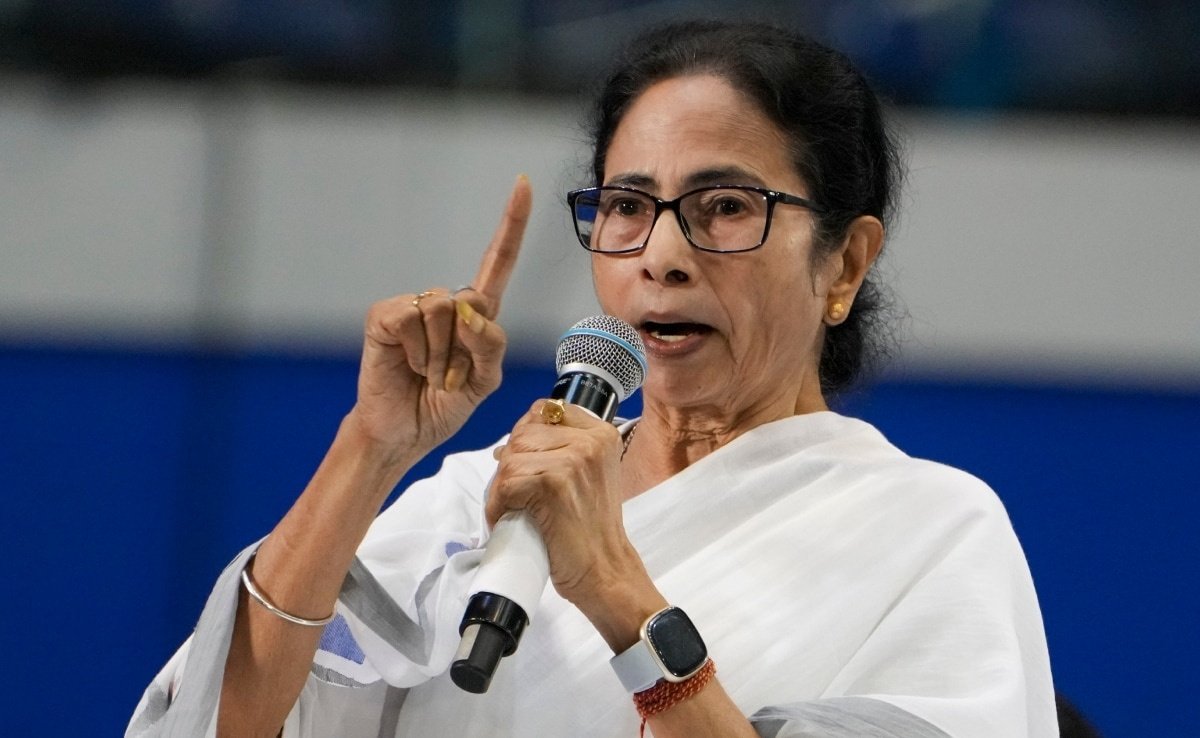
NEW DELHI: Following a seismic political shift in the April 2026 West Bengal Assembly elections, former Chief Minister Mamata Banerjee has issued an urgent call for a high-level meeting of the opposition INDIA bloc. The move signals a desperate attempt to reset her political fortunes in New Delhi after her party, the Trinamool Congress (TMC), suffered a historic defeat on its home turf.
The outreach comes at a fragile moment for the anti-BJP coalition, which is already grappling with acute internal friction, state-level rifts, and an shifting alliance landscape across southern and western India.
The Catalyst: A Historic Defeat in Bengal
The immediate trigger for Banerjee’s national pivot is the total collapse of the TMC’s 15-year dominance in West Bengal:
-
The Seat Crash: The Trinamool Congress was relegated to just 80 seats in the 294-member assembly, down from its previous massive majority of 215 seats.
-
The Saffron Surge: The Bharatiya Janata Party (BJP) crossed the majority mark to secure 207 seats, marking a historic victory and bringing an end to three terms of TMC rule.
-
Loss of the Bastion: In a highly symbolic blow, Mamata Banerjee lost her traditional home seat of Bhabanipur to her former aide-turned-rival, Suvendu Adhikari—who has since taken charge as the new Chief Minister of West Bengal.
An Uneasy Outreach: Fractured Equations in the Bloc
While Banerjee seeks a unified opposition front to challenge the newly installed BJP government in Bengal, the response from core INDIA bloc partners has been noticeably lukewarm and cautious.
1. The Congress-TMC Friction
The relationship remains highly volatile. Although Congress leader Rahul Gandhi publicly comforted Banerjee after the poll rout—blaming the loss on “vote theft” and controversial Election Commission voter list revisions—the two parties traded bitter blows during the state campaign. When asked about Banerjee’s sudden call for a meeting, sources within the Congress media department claimed to have “no idea,” hinting only at a tentative gathering sometime in June.
2. The Samajwadi Party’s Caveat
The Samajwadi Party (SP), currently the second-largest constituent in the bloc, maintained a similar distance. Party insiders stated they had no official knowledge of the development, noting that a June meeting would depend entirely on whether Banerjee reached out to SP chief Akhilesh Yadav directly.
The Tamil Nadu Complication: DMK Distances Itself
Adding to the bloc’s national anxieties is an open rift in Tamil Nadu that threatens to fracture the coalition further:
-
The DMK-Congress Fallout: Following the assembly elections in Tamil Nadu, the Congress broke ranks with its long-time ally, the DMK, to support actor-turned-politician Vijay’s party, the Tamilaga Vettri Kazhagam (TVK), in forming a new government.
-
The Retaliation: A deeply slighted DMK has formally requested separate seating arrangements in both the Lok Sabha and Rajya Sabha, effectively distancing itself from the Congress-led opposition matrix and putting its continuation in the INDIA bloc in serious jeopardy.
Looking Ahead: Can Fear of the BJP Hold the Bloc Together?
Despite the chaos, the underlying political reality keeps the INDIA bloc from completely dissolving. Regional satraps recognize that to counter a resurgent BJP, they inevitably require the pan-India structural footprint of the Congress.
Banerjee’s survival strategy relies on converting parliamentary coordination into a protective shield for regional parties. Whether she can convince an aggrieved DMK to stay at the table, or successfully integrate new players like the TVK into the alliance, remains to be seen. All eyes now look to June to see if the opposition can successfully hit the reset button, or if individual state survival will completely fragment the front.