



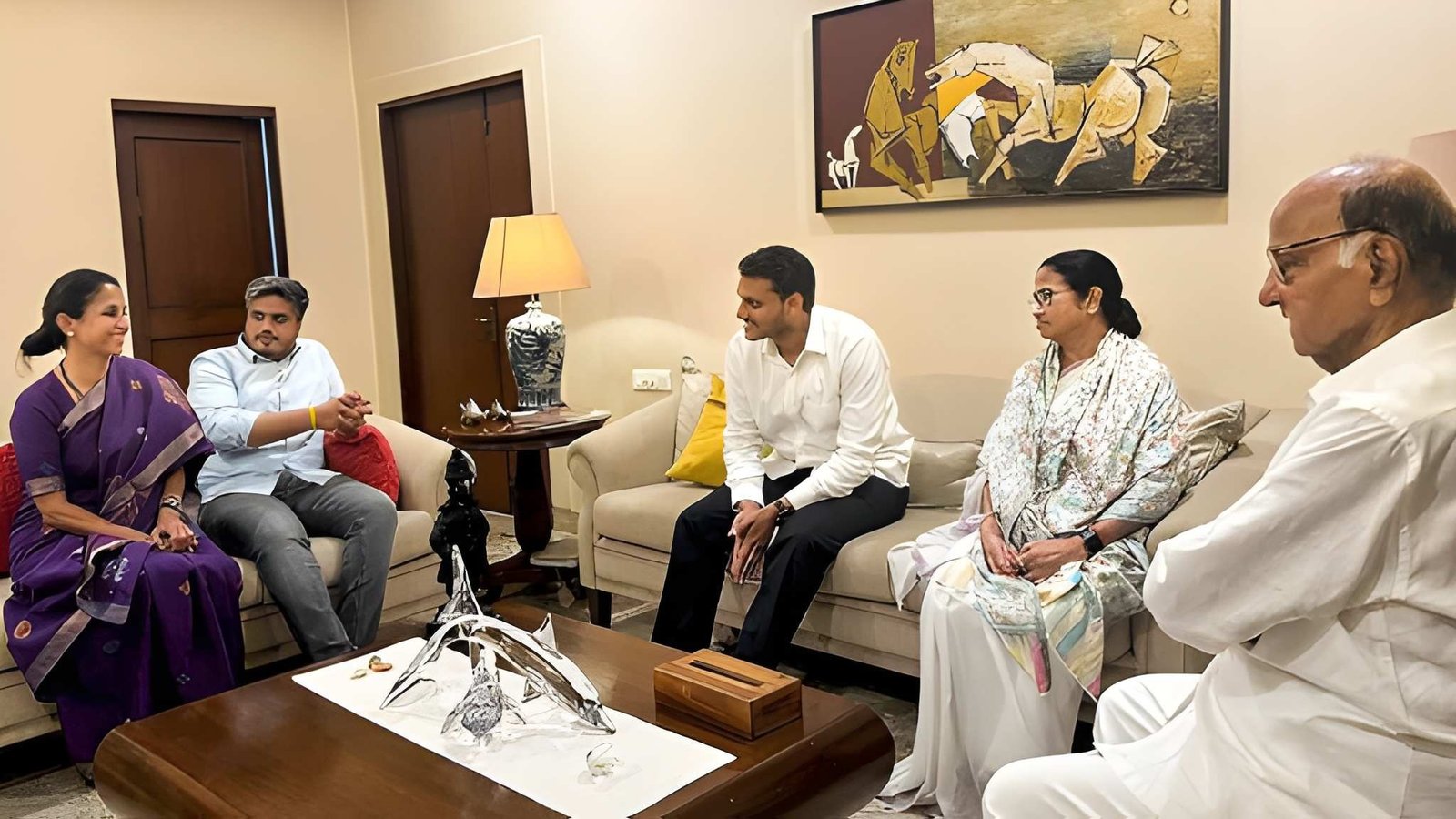
NEW DELHI — Speculation regarding a massive consolidation within India’s opposition ranks has intensified, as senior leaders openly push for an “Akhand” (United) Congress. The proposed plan envisions major regional parties that originally fractured away from the Indian National Congress—specifically Mamata Banerjee’s Trinamool Congress (TMC) and Sharad Pawar’s Nationalist Congress Party (NCP-SP)—merging back into the parent organization.
While Congress Organisation General Secretary KC Venugopal initially dismissed the merger chatter as “baseless rumors,” top state leaders have confirmed that active high-level strategic discussions are underway.
The Architecture of the Proposed Merger
The ongoing deliberations represent a fundamental shift from building loose electoral alliances to executing complete institutional integration. Key leaders across different states have signaled their support for the move:
-
The Congress Confirmation: Maharashtra Congress chief Nana Patole dropped a clear hint that a structural union is actively being processed, stating that like-minded, secular entities are preparing to fold into the grand old party. Patole claimed that a formal proposal from NCP patriarch Sharad Pawar had already been initiated at the national level to halt the large-scale fragmentation of anti-incumbency votes.
-
The Leadership Mandate: Adding heavyweight backing to the plan, former Rajasthan Chief Minister Ashok Gehlot urged all breakaway regional factions to rejoin the Congress fold and formally accept Rahul Gandhi as the unified leader of the opposition. Gehlot argued that presenting a direct, unambiguous national choice between Narendra Modi and Rahul Gandhi would fundamentally alter countrywide voting patterns.
-
The Catalyst: The momentum picked up speed following a series of high-profile, back-to-back meetings in New Delhi. Trinamool chief Mamata Banerjee held closed-door deliberations with Congress matriarch Sonia Gandhi, followed by a lengthy 90-minute session between TMC General Secretary Abhishek Banerjee and Leader of the Opposition Rahul Gandhi, where the TMC formally signaled its alignment under Gandhi’s leadership.
Historical Trajectories of the Breakaway Factions
The historical roots of these regional outfits showcase how cyclical Indian party politics can be. Both prominent leaders originally built their independent political empires by breaking away from the Congress core over distinct ideological and leadership disputes:
-
Trinamool Congress (Formed 1998): Mamata Banerjee cut ties with the Congress to form the TMC, successfully leveraging regional Bengali identity to systematically dismantle the Left Front’s decades-long rule in West Bengal and establish herself as a formidable regional force.
-
Nationalist Congress Party (Formed 1999): Sharad Pawar founded the NCP alongside PA Sangma and Tariq Anwar after being expelled from the Congress following a high-profile dispute regarding Sonia Gandhi’s foreign origin. While the party functioned as a key coalition partner for decades, it faced a catastrophic vertical split in 2023 when Pawar’s nephew, Ajit Pawar, rebelled and claimed the original party name and symbol to ally with the BJP.
Strategic Motivations: Shielding Against Rebellion
Political analysts note that the sudden urgency surrounding a full corporate-style political merger is driven by deep structural vulnerabilities within the regional outfits:
The Anti-Defection Shield: For Sharad Pawar’s camp, a total merger with a national party like the Congress provides a bulletproof legal defense under the Tenth Schedule of the Constitution. By dissolving the regional entity into a larger national pool, it prevents fluid floor-crossing and stops sub-factions from launching further internal rebellions or deserting to the treasury benches.
While the central leadership of the Congress maintains a calculated stance—insisting that any official merger proposal must formally originate from the regional parties themselves—the public endorsements from alliance partners like Shiv Sena (UBT) strategist Sanjay Raut highlight a growing consensus that regional fragmentation must end to build a stable national alternative.