



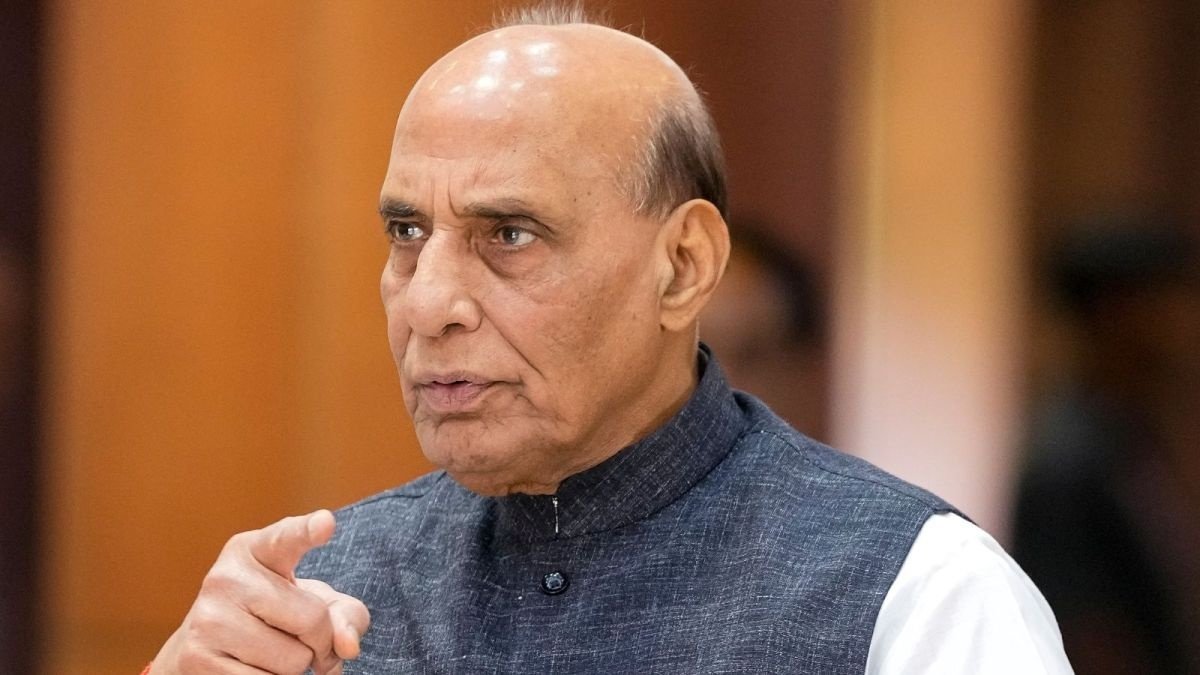
HYDERABAD — Defence Minister Rajnath Singh has delivered a sharp warning to Islamabad, reiterating that the Union government will completely block the waters of the Indus River system from reaching Pakistan as long as it continues to sponsor cross-border terrorism.
Speaking at an ‘Intellectuals Meet’ organized by the Telangana BJP in Hyderabad, Singh underscored that India’s recent strategic interventions have fundamentally altered its security posture, proving that New Delhi will no longer separate transboundary agreements from national security realities.
“Operation Sindoor” and the Treaty Abeyance
The Defence Minister highlighted India’s decisive diplomatic and resource maneuvers following a major security breach last year, drawing a direct line between state-sponsored violence and regional water rights:
-
The Strategic Response: Singh credited Operation Sindoor with demonstrating India’s resolve to counter hostile neighbors through unconventional statecraft, remarking that the operation proved India knows how to respond to those who do not understand the language of peace.
-
Suspending the Indus Waters Treaty (IWT): Referencing the landmark decision triggered by the catastrophic Pahalgam terror attack, Singh stated: “By suspending the Indus Waters Treaty, we said that those whose tears have dried up should not expect water from us. We will not let the waters of the Sindhu reach the patrons of terrorists and enemies of humanity.”
-
The Paradigm Shift: The statement directly reinforces the core geopolitical doctrine originally voiced by Prime Minister Narendra Modi following the Pahalgam incident—that “blood and water cannot flow together.”
Originally signed on September 19, 1960, the IWT has historically been cited as one of the world’s most resilient water-sharing agreements. However, utilizing its sovereign rights under international law, India placed the treaty in total abeyance, sending a clear message that bilateral treaties cannot function in isolation from ground-level security realities. The suspension will remain enforced until Pakistan credibly and irrevocably dismantles its cross-border terror infrastructure.
A Look at Twelve Years of Institutional Reforms
Beyond border security and hydro-diplomacy, the Defence Minister used the platform to map out the broader domestic achievements of the NDA administration over the last 12 years, focusing heavily on internal security and legislative updates:
-
The Integration of Kashmir: Singh pointed to the smooth abrogation of Article 370 as a definitive shift in internal security, noting that the Kashmir valley has transitioned from a theater of active militancy to a hub for economic growth, foreign investments, and tourism. He highlighted civic indicators of normalization, including the peaceful return of long-suspended religious processions, vibrant commerce, and the reopening of local cinema halls.
-
Internal Security & Fiscal Anchors: The address detailed the systematic reduction of the Naxalite movement across central India, bringing the country close to being entirely Naxal-free. Singh also credited structural reforms—such as the nationwide implementation of the Goods and Services Tax (GST), complete rural electrification, and the overhaul of the colonial-era criminal justice system—with cementing India’s long-term economic stability.
The Defence Minister concluded by stating that India’s defense and foreign policies have moved past defensive posturing, adopting an assertive strategy that directly links regional economic privileges to the maintenance of regional peace.