



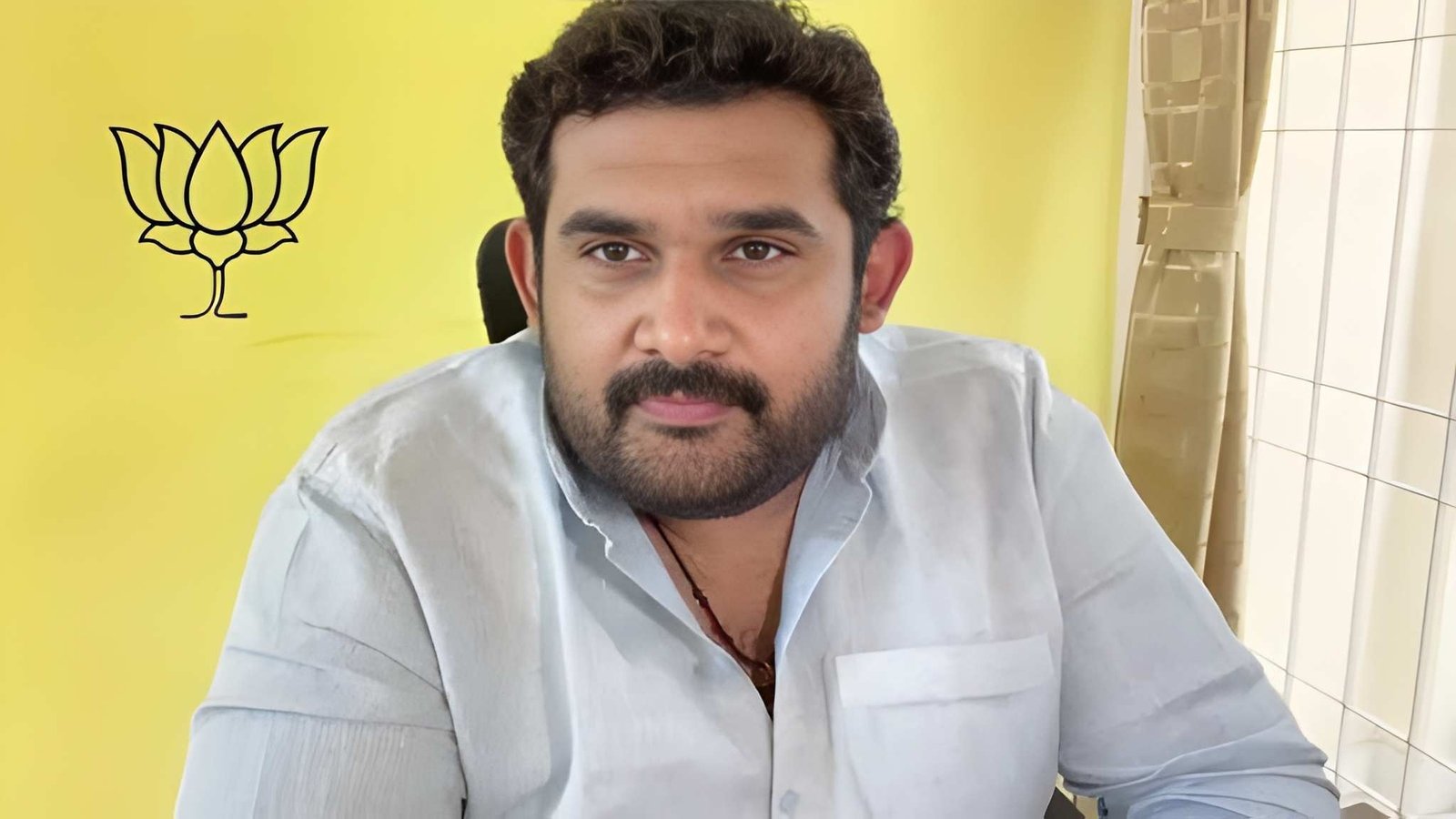
CHENNAI — The structural rift inside the Tamil Nadu BJP exploded into the open on Wednesday night as State Secretary Amar Prasad Reddy resigned from the party, launching a fierce parting salvo at local leadership. Reddy accused the state party apparatus of turning into an unrepresentative “closed shop” that actively sidelines rising talent.
In a detailed nine-minute video message published directly after handing in his resignation, Reddy compared the internal power dynamics of the state BJP to the state’s ruling Dravida Munnetra Kazhagam (DMK).
“We constantly campaign on the fact that we are entirely different from the DMK,” Reddy stated. “But when you look closely, what is the operational difference between the Tamil Nadu BJP and the DMK? The DMK relies on traditional dynasty politics, while the BJP unit here is strictly controlled by a small clique of four or five individuals.”
Mass Resignations Triggered by the “Annamalai Factor”
Reddy’s high-profile departure is not an isolated incident. It marks the latest flashpoint in a coordinated wave of resignations sweeping through the BJP’s state and district-level hierarchies. The exodus follows the recent resignation of former state president K. Annamalai, a charismatic former IPS officer who left the party to build his own independent socio-political organization, “We The Leaders.”
Widely regarded as one of Annamalai’s closest political strategists, Reddy confirmed he is completely cutting ties with the BJP to integrate into Annamalai’s volunteer-led movement.
Reflecting on his decade-long journey since joining the BJP in 2013 out of deep admiration for Prime Minister Narendra Modi, Reddy expressed deep frustration over how the party treats its leadership. He pointed out that while Annamalai successfully engineered an unprecedented growth in the BJP’s regional presence—boosting its state vote share from a historic low of 3 percent to nearly 12 percent in the 2024 Lok Sabha elections—he faced intense friction from entrenched party veterans rather than receiving recognition.
Backing Historic Losers Over Proven Growth?
Reddy sharply criticized what he described as glaring “double standards” in how party headquarters doles out political rewards and institutional promotions.
“Tamilisai Soundararajan was appointed as a Governor after her efforts for the party, while L. Murugan was given a Rajya Sabha MP seat and later elevated to a Union Minister despite losing their respective elections,” Reddy pointed out.
He openly questioned why a powerful internal circle associated with a measly 3 percent vote share continues to control candidate selections and state strategy despite continuous electoral defeats, while a dynamic leader who expanded the party’s voter base fourfold was forced out due to internal jealousy and short-term alliance calculations. He alleged that established state leaders are deeply uncomfortable with the rapid rise of younger, highly knowledgeable figures coming out of Tamil Nadu.
A Rewritten Political Map
Predicting a structural transformation of the state’s political landscape, Reddy asserted that the conventional Dravidian duopoly is rapidly fracturing.
He claimed that the future of Tamil Nadu’s political discourse will sharpen into a direct, two-way battle between K. Annamalai’s reformist platform and actor-turned-politician Chief Minister C. Joseph Vijay’s Tamilaga Vettri Kazhagam (TVK). Legacy political institutions, Reddy argued, are quickly sliding into absolute irrelevance.