



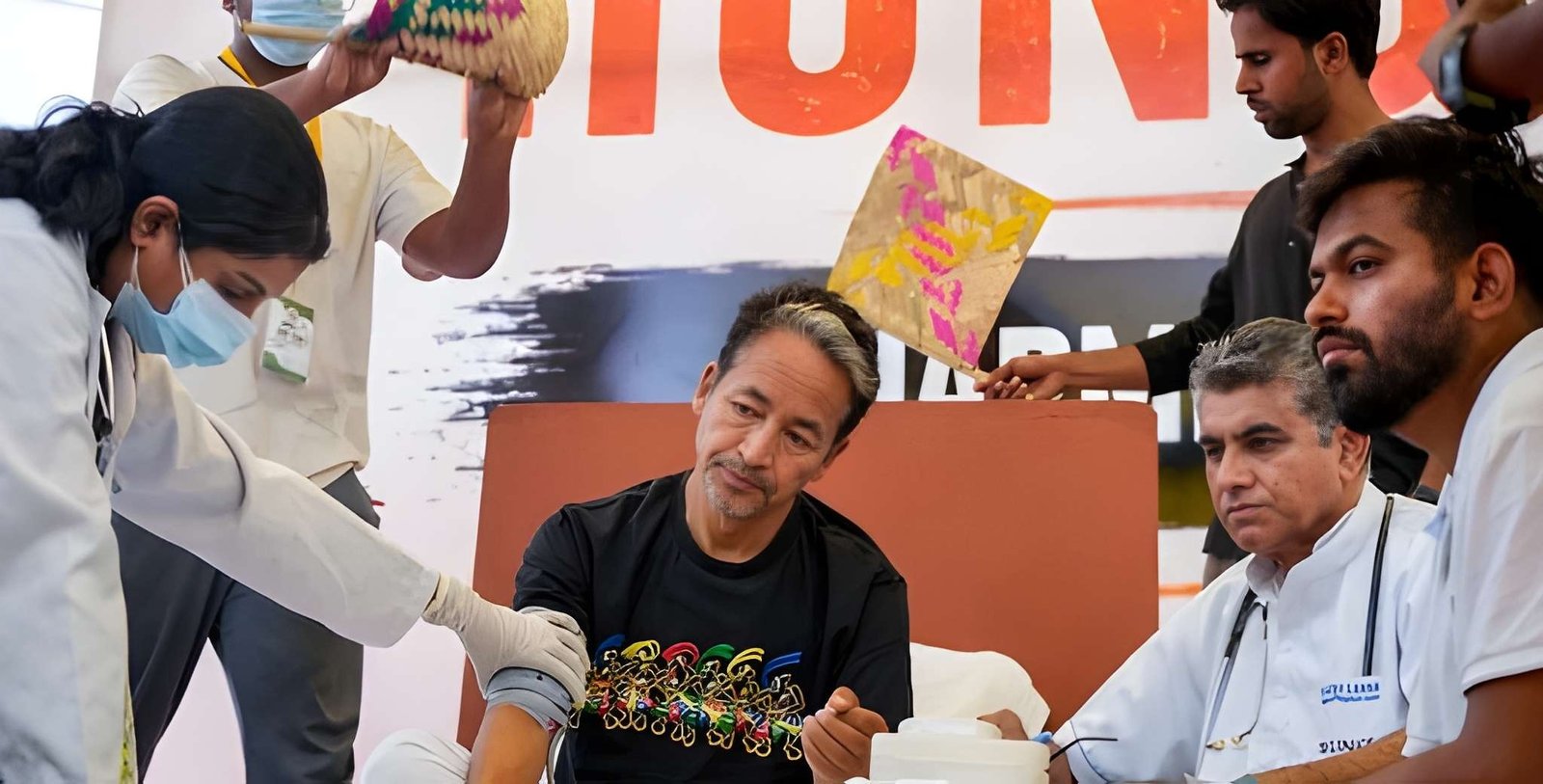
NEW DELHI — Entering a critical operational phase, the indefinite hunger strike by prominent reformer and activist Sonam Wangchuk has reached its 20th consecutive day in the capital.
The 59-year-old activist is striking to demand systemic accountability and the resignation of Union Education Minister Dharmendra Pradhan following the alleged NEET examination paper leak controversy. The demonstration is strategically timed to build momentum for a large-scale, peaceful public march to Parliament on July 20, marking the opening day of the legislative Monsoon Session.
Severe Medical Warnings and High Court Directives
As the fast draws closer to the three-week mark, medical professionals are raising urgent alarms regarding the activist’s deteriorating physical condition:
-
Physiological Decline: Regular clinical assessments led by Dr. Satish Lamba indicate that Wangchuk’s health has entered a dangerous stage. Subsisting solely on water, the activist has recorded a weight loss of 9 kg, with his body rapidly depleting muscle tissue and fat reserves, threatening vital organ function.
-
Legal Oversight: Responding to the escalating health risks, the Delhi High Court has intervened, instructing local administrative and medical authorities to conduct daily diagnostics and stand ready to administer emergency medical care if his vitals drop further.
-
Protest Timeline: The wider civic agitation led by the Cockroach Janta Party (CJP) began on June 20, with Wangchuk officially joining the indefinite fast on June 28. He has firmly rejected calls to terminate the strike without an official policy response from the government.
Mobilization Strategy for the Monsoon Session
Despite extreme physical weakness, Wangchuk is keeping the public focus entirely on the upcoming legislative demonstration:
-
Call for Public Turnout: Speaking to a gathering of supporters, Wangchuk characterized himself as “weak from the outside but very strong inside,” urging citizens to ensure a massive, peaceful assembly at Parliament on July 20 to present their grievances directly to lawmakers.
-
Core Objectives: The movement continues to advocate for sweeping structural changes within national competitive testing frameworks to restore public trust and protect millions of student applicants affected by testing irregularities.
The Administrative Outlook: A high-profile hunger strike converging with the start of the parliamentary Monsoon Session places immediate pressure on both capital law enforcement and federal policymakers. Managing the logistical security of the July 20 march while simultaneously addressing deep-seated anxieties over national examination security will remain a high-priority challenge for central governance over the coming weeks.