



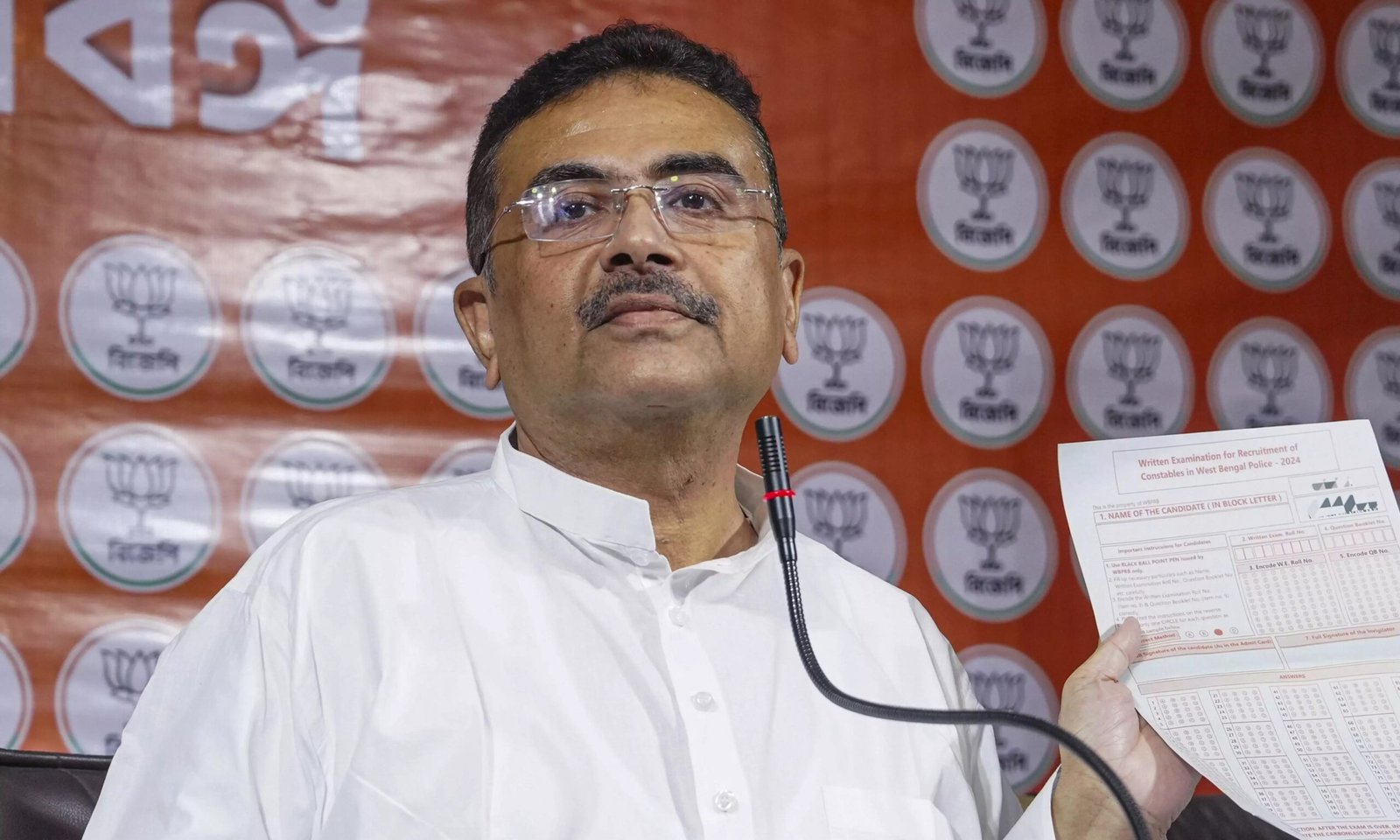
KOLKATA — In a historic shift that redefines the political landscape of Eastern India, Suvendu Adhikari was sworn in today as the first Bharatiya Janata Party (BJP) Chief Minister of West Bengal. The ceremony, held at the iconic Brigade Parade Grounds, marks the end of Mamata Banerjee’s 15-year tenure and the beginning of a new chapter for the saffron party in the state.
The timing of the event added a layer of cultural significance, coinciding with the birth anniversary of Rabindranath Tagore. Governor RN Ravi administered the oath of office and secrecy to Adhikari and his initial cabinet in the presence of Prime Minister Narendra Modi and Union Home Minister Amit Shah.
A Dramatic Ascension
Adhikari’s journey to the state’s highest office is being described by political analysts as nothing short of cinematic. Once a top lieutenant to Mamata Banerjee, Adhikari’s defection and subsequent rise within the BJP ranks culminated in a decisive electoral victory.
The BJP secured a commanding 207 seats in the 294-member assembly, a landslide that effectively dismantled the Trinamool Congress (TMC) stronghold.
The New Cabinet: A Study in Diversity
The initial team sworn in alongside Adhikari reflects the BJP’s strategic focus on social engineering and grassroots representation. The new ministers include:
-
Dilip Ghosh: The former state president credited with expanding the party’s ground network since 2014.
-
Agnimitra Paul: A prominent face for the party’s women’s wing.
-
Ashok Kirtania: Representing the influential Matua community.
-
Kshudiram Tudu: Highlighting the party’s outreach in tribal-dominated Western Bengal.
-
Nishith Pramanik: A key figure for the Rajbonshi community and the youth vote.
Political Significance
The presence of the Prime Minister and Home Minister underscores the importance the central leadership places on this victory. For the BJP, winning West Bengal has been a primary objective for over a decade, representing a final frontier in their “Look East” policy.
“Today is more than just a dream come true for the BJP,” noted one political commentator. “It is the culmination of years of organizational building and a narrative shift that has finally resonated with the Bengal electorate.”
As Adhikari takes the reins, the state watches closely to see how the “hero of Nandigram” will transition from a fiery opposition leader to the administrator of one of India’s most complex and politically volatile states.