



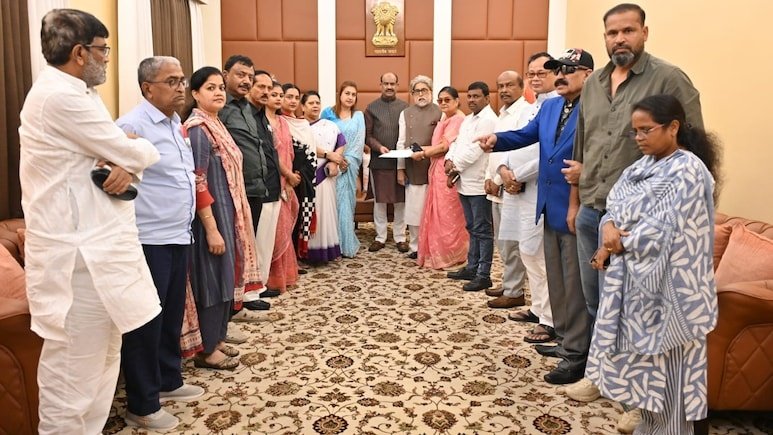
NEW DELHI — In a highly calculated constitutional maneuver, 20 rebel Members of Parliament from the All India Trinamool Congress (AITC) met with Lok Sabha Speaker Om Birla to formalize a merger with the Nationalist Citizens Party of India (NCPI).
Representing over two-thirds of the Trinamool Congress’s strength in the Lower House, the breakaway faction successfully navigated the stringent parameters of India’s anti-defection law, shifting the balance of power in New Delhi without triggering immediate mid-term disqualifications.
The Constitutional Strategy: Why a Merger Trumps a Split
The rebel faction’s decision to link up with the NCPI—a registered but unrecognized political entity based in Tripura—was driven entirely by constitutional necessity rather than shared ideology:
-
The Evolution of the Tenth Schedule: When the Anti-Defection Law was originally enacted in 1985, it protected breakaway factions if at least one-third of a legislature party initiated a “split.” Following widespread political engineering throughout the 1990s, Parliament passed the 91st Constitutional Amendment Act in 2003, which completely deleted the split provision.
-
The Two-Thirds Threshold: Under current laws, the only structural route to avoid surrendering a parliamentary seat during a defection is a formal merger. This requires a minimum of two-thirds of the legislature party to merge with an already existing, registered political party. By mobilizing 20 MPs, the Trinamool rebels safely cleared this legal benchmark.
-
The NCPI as a Legal Vessel: Holding just 0.047% of the total vote share from its lone outing in the 2023 Tripura assembly elections, the NCPI possessed no significant federal footprint but carried the crucial legal status of being a “registered party.” This satisfied the exact letter of the law required to validate the merger.
Political Realities: Opting for NCPI Over Direct BJP Absorption
While initial intelligence indicated that the rebel MPs were in active contact with Union Minister and BJP Bengal in-charge Bhupender Yadav, a direct merger into the Bharatiya Janata Party was ultimately abandoned for pragmatic reasons:
-
Mitigating Local Electorate Backlash: For many rebel MPs elected from Bengal, directly donning the saffron scarf immediately after a bitter April-May state election could have spelled political suicide. Moving into a smaller neutral entity like the NCPI dilutes voter hostility while keeping their parliamentary status intact.
-
Preserving BJP Cadre Morale: Following the 2026 Bengal elections where the BJP defeated the Trinamool to assume power in the state, absorbing top-tier rivals directly into the party would have triggered intense friction among grassroots BJP workers who fought against those very leaders for years.
-
The NDA Coalition Strategy: By taking over the NCPI, the rebel MPs can preserve their independent identity while formally aligning with the ruling National Democratic Alliance (NDA).
The Legislative Upshot: The addition of these 20 Lok Sabha seats significantly boosts the NDA’s numerical strength in the Lower House, positioning the ruling coalition closer to passing the crucial Delimitation Bill, which previously failed to secure a requisite majority during the April 2026 extended budget session.