



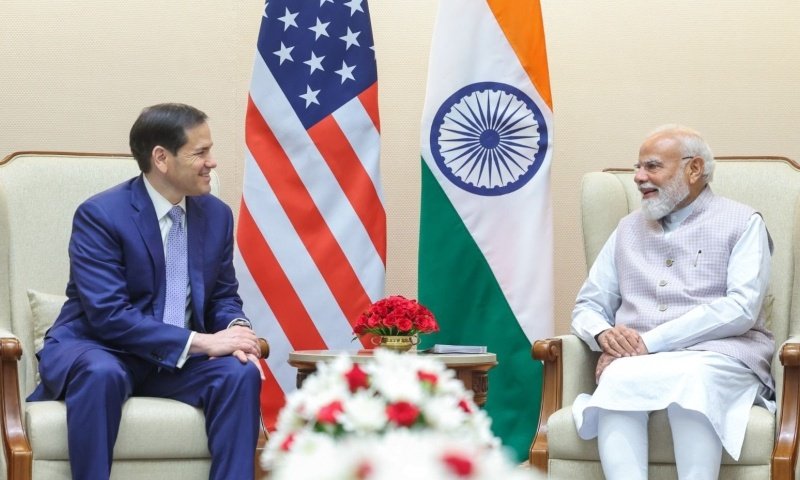
NEW DELHI: Underscoring the growing momentum of the India–U.S. Comprehensive Global Strategic Partnership, the United States Secretary of State, H.E. Mr. Marco Rubio, called on Prime Minister Shri Narendra Modi in New Delhi.
The high-profile meeting featured extensive briefings on critical bilateral sectors, alongside high-level consultations regarding ongoing geopolitical shifts, most notably the volatile security matrix in West Asia.
Key Takeaways
-
Comprehensive Bilateral Audit: Secretary Rubio briefed Prime Minister Modi on the sustained, structured progress achieved across core bilateral tracks. Deliberations focused heavily on deepening ties in defense production, critical and emerging strategic technologies (iCET), trade and mutual investment, energy security, supply chain connectivity, and expanding people-to-people academic exchanges.
-
Geopolitical Alignments & West Asia: The Secretary of State shared the current U.S. administration’s strategic perspective on pressing global flashpoints. The discussions specifically prioritized the stabilizing measures required to handle the maritime and economic friction points emerging from the West Asian conflict zones.
-
India’s Stance on Global Conflict Resolution: Reaffirming India’s traditional geopolitical doctrine, Prime Minister Modi reiterated India’s consistent and unwavering support for global peace initiatives. The PM emphasized that long-term stabilization across global conflict zones can only be achieved through peaceful resolution, constructive dialogue, and sustained diplomacy.
-
Sovereign Greetings Exchanged: Highlighting the deep institutional and personal rapport between the heads of state, Prime Minister Modi conveyed his warm greetings to President Donald Trump, adding that he looked forward to continuing active high-level bilateral exchanges.
Strategic Context: Deepening the iCET and Defense Framework
The timing of Secretary Rubio’s diplomatic visit carries significant strategic weight, coming amid intense global supply chain reshuffling. Analysts note that the engagement cements a bipartisan consensus in Washington to position India as a primary democratic counterweight in the Indo-Pacific.
By focusing on the Initiative on Critical and Emerging Technology (iCET), both nations are fast-tracking joint ventures in semiconductor manufacturing, artificial intelligence-driven defensive systems, and space commercialization, transforming the bilateral relationship from a traditional buyer-seller dynamic into a co-development alliance.