



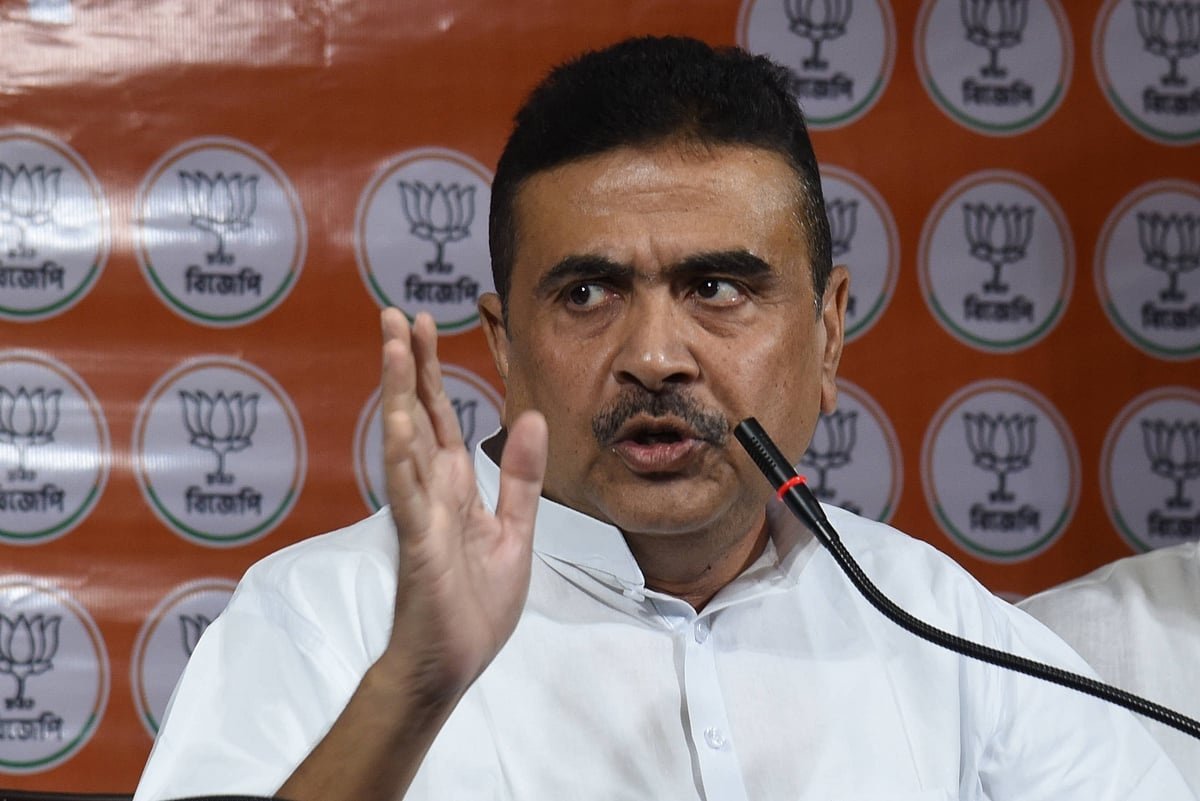
NEW DELHI: A major political and religious standoff has emerged following a landmark directive by the newly inducted West Bengal Chief Minister, Suvendu Adhikari. The provincial government has made the singing of India’s national song compulsory across all educational platforms, drawing immediate resistance from Islamic bodies and intensifying a national debate on fundamental rights.
Executive Mandate and Chief Ministerial Ultimatum
In one of his opening administrative decisions upon taking charge of West Bengal, Chief Minister Suvendu Adhikari ordered that Vande Mataram be sung in its entirety during morning assemblies at all schools and madrasas across the state.
Responding to criticism, Adhikari framed the directive as a non-negotiable metric of civic allegiance and cultural preservation:
-
The Mandate: “If you want to live in this country, you must say Vande Mataram and Jana Gana Mana, and you must respect 26th January and 15th August,” Adhikari declared.
-
Cultural Framework: He defended the rule as an extension of Indian and Sanatan culture, asserting that “this country cannot go into anyone else’s hands”.
AIMPLB Demands Total Withdrawal or Exemptions
The All India Muslim Personal Law Board (AIMPLB) has raised strong constitutional objections to the West Bengal government’s notification. The apex board has demanded that the order be “withdrawn immediately” or that Muslim students be officially exempted from it.
In a formal press statement, AIMPLB spokesperson Dr. SQR Ilyas argued that compelling students to recite a text or song that directly contradicts their religious beliefs constitutes a clear violation of their Fundamental Rights.
Central Support and Cross-State Polarization
The development in West Bengal reflects broader policy shifts, coming on the heels of a Union Home Ministry directive mandating that all six stanzas of Vande Mataram—including four previously removed in 1937—be rendered before the national anthem at all government functions and schools. Attendees are required to stand at attention during the performance.
The issue has ignited reactions across multiple political lines:
-
Union Government Alignment: Union Minister Kiren Rijiju firmly backed the Adhikari government’s move, stating that Vande Mataram is a national song belonging to the entire country, leaving absolutely no scope for politicization.
-
The Length Dispute: Conversely, Congress MP Shashi Tharoor questioned the necessity of rendering all five verses at both the start and end of official events, calling the full-length requirement “unnecessary and burdensome” for the public.
-
Counter-Criticism: Reacting to Tharoor’s comments amid a related song controversy in Keralam, state BJP chief Rajeev Chandrasekhar attacked the Congress party, accusing its leadership of allowing its nationalist outlook to be dictated by regional religious outfits.
Historical Background
Originally written by Bankim Chandra Chatterjee in the 1870s, Vande Mataram was officially granted the status of India’s national song by the Constituent Assembly on January 24, 1950.