



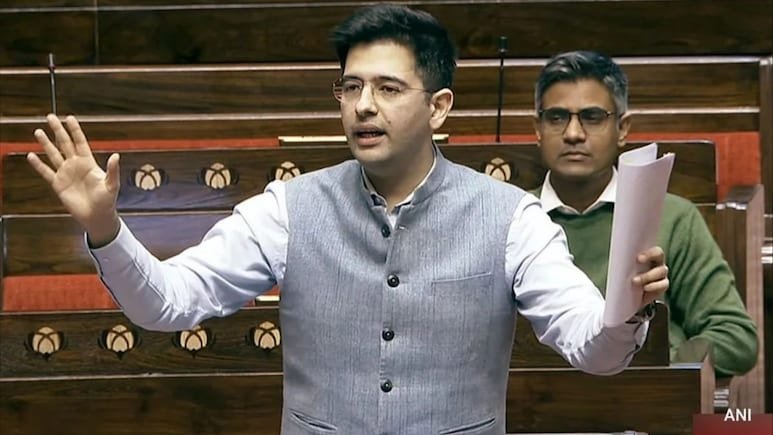
NEW DELHI – During a Rajya Sabha session on March 31, 2026, Aam Aadmi Party (AAP) MP Raghav Chadha made a strong legislative push for a national Paternity Leave Act. Arguing that childcare responsibilities fall disproportionately on women, Chadha called for a legal framework that recognizes the father’s role as a “mechanical necessity” in the early stages of a child’s life.
The Case for Policy Reform
Chadha highlighted the current legal gap in India’s labor laws, noting that while the Maternity Benefit Act of 1961 protects women, there is no equivalent for men in the private sector.
-
Shared Responsibility: He argued that the presence of a partner is crucial for a mother’s recovery and the newborn’s development, stating that fathers should not have to “choose between their jobs and their families.”
-
Judicial Alignment: The demand aligns with recent observations from the Supreme Court, where Justices J.B. Pardiwala and R. Mahadevan noted that a father’s role in early childhood is “equally important and cannot be ignored.”
Current Status of Paternity Leave in India
| Sector | Current Policy |
| Government | Under 1972 Rules, male employees get 15 days of paid leave (for up to two children). |
| Private Sector | No legal mandate; leave is entirely at the discretion of the employer. |
| Past Attempts | The Paternity Benefit Bill (2017) proposed up to 3 months of leave but failed to pass. |
Global Benchmarks
Chadha pointed toward Nordic models as the gold standard for parental equality:
-
Sweden: Offers 480 days of shared leave with specific quotas for each parent.
-
Norway & Iceland: Feature mandatory “father’s quotas” to ensure men participate in caregiving.
-
Finland: Provides 164 days of leave per parent.
Broader Advocacy
This push follows Chadha’s history of raising consumer-centric and public interest issues in Parliament, ranging from airline baggage charges to the health standards of packaged juices. By advocating for paternity leave, he aims to align India’s labor framework with evolving societal norms and global gender equality standards.