



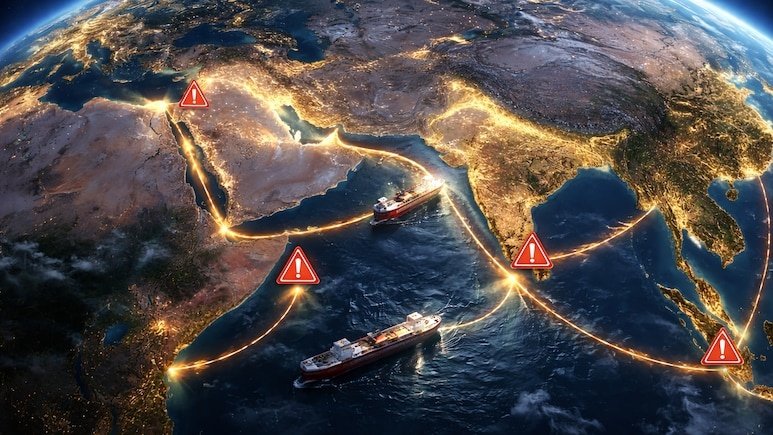
TEHRAN – Escalating the current maritime standoff, Iran’s military command has warned that it will shut down critical trade routes in the Persian Gulf, the Sea of Oman, and the Red Sea if the United States continues its naval blockade of Iranian ports.
The warning follows reports from the U.S. Central Command that maritime traffic to and from Iran has been effectively halted as part of a strategic pressure campaign.
Violation of Ceasefire
In a statement broadcast on Iranian state television, the Khatam al-Anbiya Central Headquarters—Tehran’s top joint military command—labeled the American blockade a direct violation of the existing ceasefire.
“Our armed forces will not allow trade to flow through the Red Sea if the naval blockade continues. We will not allow any exports or imports in the Gulf… if the American blockade continues,” a senior commander stated.
Strategic Implications for Global Trade
The threat poses a massive risk to the Bab al-Mandab Strait, a vital artery for East-West trade. Iran’s alignment with Yemen’s Houthi rebels provides them the leverage to potentially choke off Red Sea transit, which would disrupt global supply chains and energy markets.
Key Points from the Warning:
-
Maritime Insecurity: Iran warned that any interference with its commercial vessels or oil tankers would trigger “retaliatory measures.”
-
National Sovereignty: Maj. Gen. Ali Abdollahi stated that Iran would act with “full force” to defend its interests if U.S. “unlawful actions” persist.
-
U.S. Troop Movements: The threat coincides with reports that the U.S. is preparing to deploy thousands of additional troops to the Middle East to bolster its regional presence.
Current Status
As of April 15, the Strait of Hormuz has seen only limited disruption to non-Iranian vessels, but the rhetoric from Tehran suggests a transition toward a broader regional blockade. With the U.S. maintaining its “maximum pressure” naval stance and Iran threatening to paralyze international shipping, the risk of a renewed direct military confrontation remains high.