



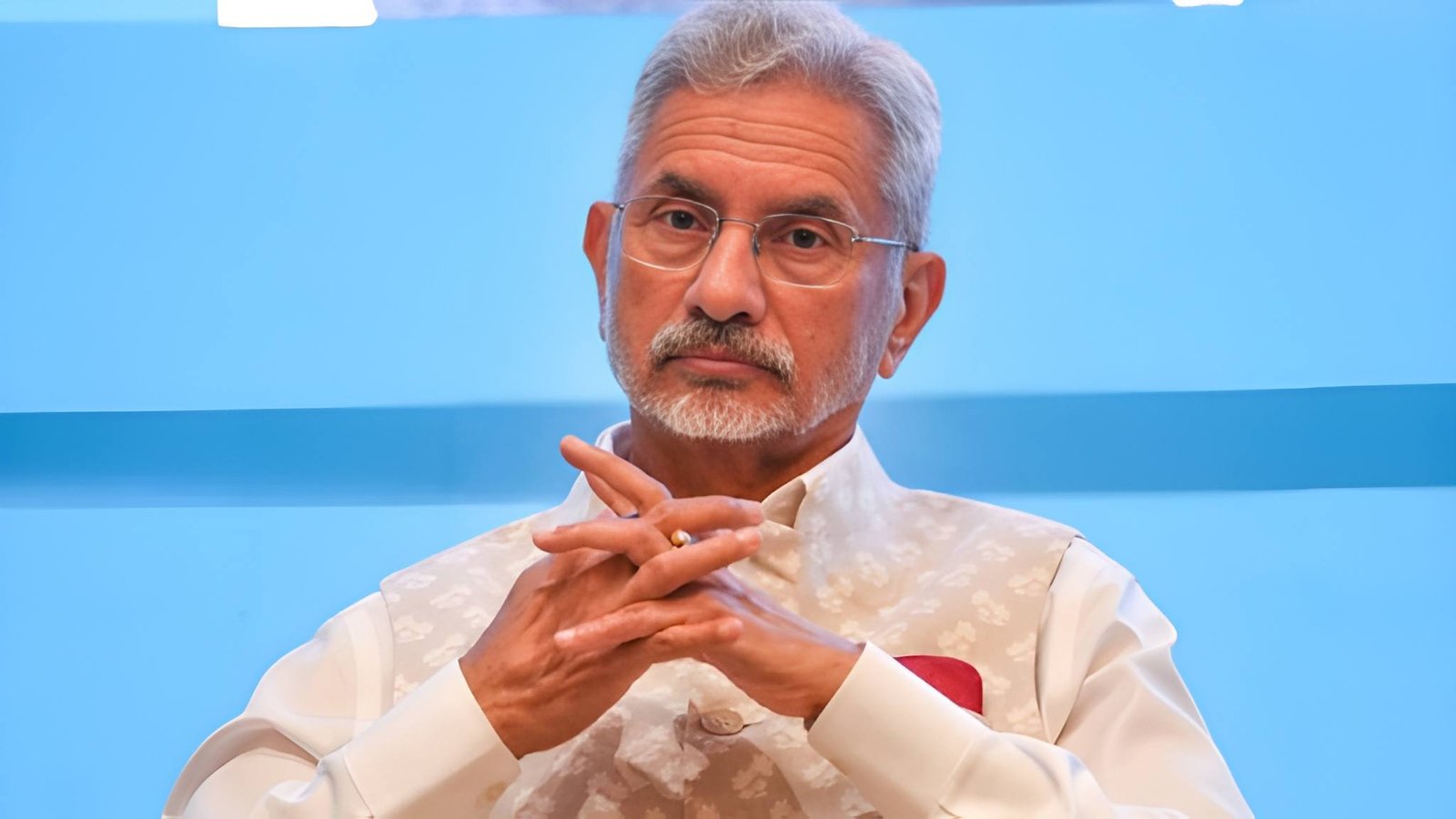
NEW DELHI — External Affairs Minister S. Jaishankar addressed the complex dynamics of India-China relations, emphasizing that while friction between large neighboring nations is inevitable, restoring peace and tranquility along the border remains the foundational prerequisite for normalizing bilateral ties.
Speaking at the NDTV World Summit 2026 in New Delhi, the minister stated that both New Delhi and Beijing recognize the strategic necessity of maintaining a functional working relationship despite unresolved territorial disputes.
Key Takeaways
-
Inevitable Bilateral Friction: External Affairs Minister S. Jaishankar noted that differences between major adjacent powers are expected, stressing that both nations must constructively address underlying disputes.
-
Comprehensive Boundary Framework: The minister clarified that any final resolution must encompass the entire border, while concrete discussions can initiate from specific operational sectors.
-
Prerequisite of Border Peace: Maintaining stability along the Line of Actual Control (LAC) remains essential for restoring civil society, economic, and political engagement.
-
Strategic Interest in Stability: Both countries agree that an overly hostile or acrimonious relationship serves neither national interest, necessitating a structured approach to managing differences.
Border Stability and Diplomatic Negotiations
Addressing queries regarding India’s approach toward boundary negotiations with China, Jaishankar affirmed that the government’s core position remains consistent while maintaining operational flexibility in dialogue.
Clarifying the structure of ongoing diplomatic and military talks, the External Affairs Minister stated:
“For any settlement to happen, it will have to include the entire boundary. And I mean, it has never been any… I don’t think there’s a change of position in that sense. I mean, any settlement has to be across, but any discussion also, any concrete discussion has to begin somewhere, you know. I mean, there’s got to be a starting point.”
Jaishankar outlined that prior to the 2020 border escalations and the Galwan Valley clash, bilateral relations were regulated by established agreements, patrol distances, and signaling protocols designed to prevent physical conflict.
Impact of 2020 Escalations and Path Toward Normalization
The External Affairs Minister highlighted that the breakdown of border protocols in 2020 severely impacted broader bilateral mechanisms, affecting trade flows, political exchanges, and institutional contact:
-
Disruption of Equilibrium: The violence along the LAC altered decades-old diplomatic assumptions, demonstrating that broader economic ties cannot function normally while border security remains compromised.
-
Shared Strategic Interest: Both nations acknowledge that prolonged hostility is counterproductive, with both sides seeking a sustainable framework to manage differences without escalating into confrontation.
-
Gradual Realignment: Normalizing bilateral ties will require time and systematic effort, with peace along the frontier serving as the essential benchmark for future engagement.