



New Delhi / Guwahati- The government is tackling a contrasting dual weather crisis. While central and western parts of the country face severe seasonal rainfall deficits and potential drought risks driven by a strengthening El Niño, Northeast India is battling severe flash floods and landslides.
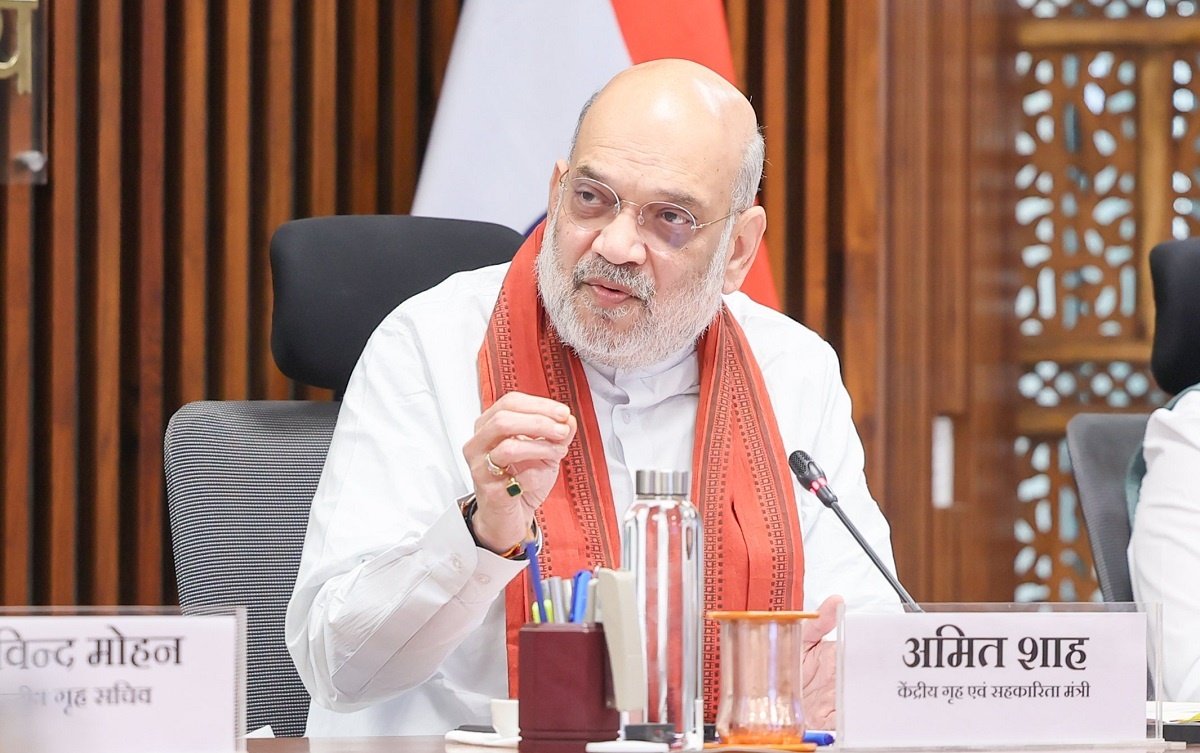
On Friday, Union Home Minister Amit Shah chaired a high-level review meeting alongside Union Agriculture Minister Shivraj Singh Chouhan to assess drought preparedness, enforce strict crop-vigilance protocols, and deploy central teams to assess severe flood damage in Assam and Arunachal Pradesh.
Part 1: Managing Below-Normal Monsoon & Drought Risks
The India Meteorological Department (IMD) confirmed that India witnessed its fifth-lowest rainfall in June since 1901, registering a massive 40% nationwide deficit. Central India has been the hardest hit, enduring a 50.4% shortfall. With El Niño conditions expected to intensify across the equatorial Pacific Ocean through the June–September window, the IMD has projected below-normal precipitation for July.
To cushion the agricultural impact, Home Minister Amit Shah issued several direct instructions to the ministries present:
-
Crop Advisory Management: The Ministry of Agriculture and related bodies must coordinate directly with state governments to advise farmers on switching to alternative, low-water-intensity crops such as millets, pulses, and fodder.
-
Reservoir Tracking: The Department of Water Resources was instructed to stringently monitor all major water reservoirs to manage supply allocations efficiently.
-
Uninterrupted Power Supply: The Secretary of the Ministry of Power was directed to ensure stable and adequate electricity distribution to support rural tube wells and agricultural pumping needs.
The government reassured that national essential food grain stocks remain entirely adequate and commodity pricing continues to stay stable.
Part 2: Sending Emergency Teams to Flood-Ravaged Northeast
In stark contrast to the national deficit, torrential downpours and cloudbursts have devastated portions of the Northeast.
To address the immediate humanitarian crisis, the Home Minister ordered the immediate deputation of an Inter-Ministerial Central Team (IMCT) from the Ministry of Home Affairs to conduct on-the-spot damage assessments in both Assam and Arunachal Pradesh.
Arunachal Pradesh: Clearer Weather After Widespread Destruction
The state is recovering from heavy rainfall, cloudbursts, and landslides that have claimed four lives since late June. State Emergency Operation Centre (SEOC) data indicates that over 90,000 residents across 251 villages have been impacted.
-
Infrastructure Damage: Intense landslides have disrupted critical transport lifelines, including blockages on the Potin-Hoj road and severe damage along the Roing-Anini axis. In total, 121 roads and 13 bridges have sustained damage, alongside massive infrastructure losses to water facilities, power lines, and crop fields.
-
The Indian Air Force (IAF) and NDRF have actively rescued stranded civilians, and rescue and restoration operations remain underway.
Assam: Rising Waters Affect Thousands
Downstream, the first major flood wave of the monsoon has impacted nearly 50,000 people across multiple districts, with Dhemaji bearing the brunt of the impact.
-
Breached Embankments & Damaged Rail: Torrential runoff from Arunachal Pradesh caused an embankment breach in Jonai, submerging dozens of villages overnight. Strong river currents also led to the partial collapse of a railway bridge pier over the Simen River, forcing the suspension of train services between Archipathar and Simen Chapari stations.
-
The Assam State Disaster Management Authority (ASDNA) is actively providing relief materials, operating camps for displaced families, and deploying rescue boats.
The newly deployed IMCT will evaluate the scale of damage to human habitation, agriculture, and infrastructure to fast-track targeted funds from the National Disaster Response Fund (NDRF).
For an in-depth broadcast on the ongoing crisis, you can watch this WION Report on the Northeast Floods which shows the scale of the monsoon fury disrupting Assam and Arunachal Pradesh.